
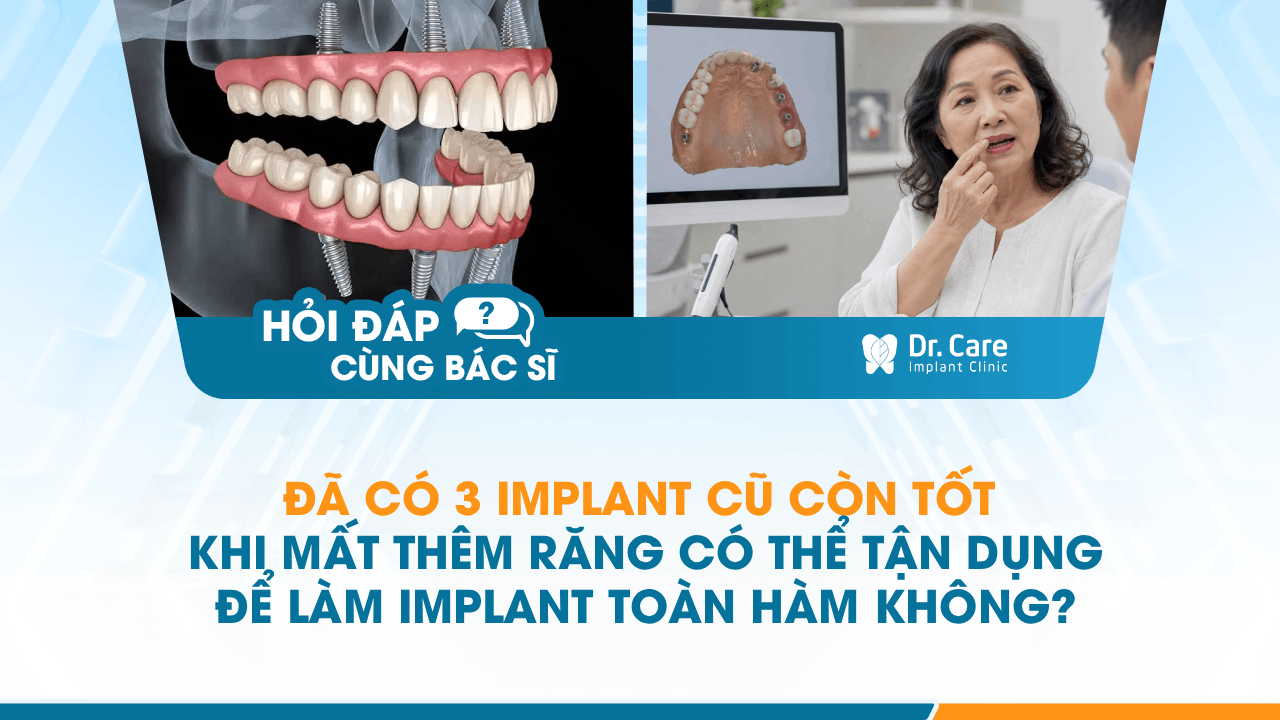
Cô Kim Phượng 60 tuổi đã có 3 Implant đơn lẻ sử dụng nhiều năm và hiện vẫn ổn định, nhưng nay mất thêm nhiều răng trên cùng hàm. Bác sĩ phân tích khi nào Implant cũ có thể được giữ lại và tích hợp vào kế hoạch toàn hàm mới, khi nào chỉ nên giữ nhưng không dùng làm trụ cho cầu toàn hàm, và trường hợp nào mới thật sự cần tháo Implant cũ để lập lại kế hoạch.
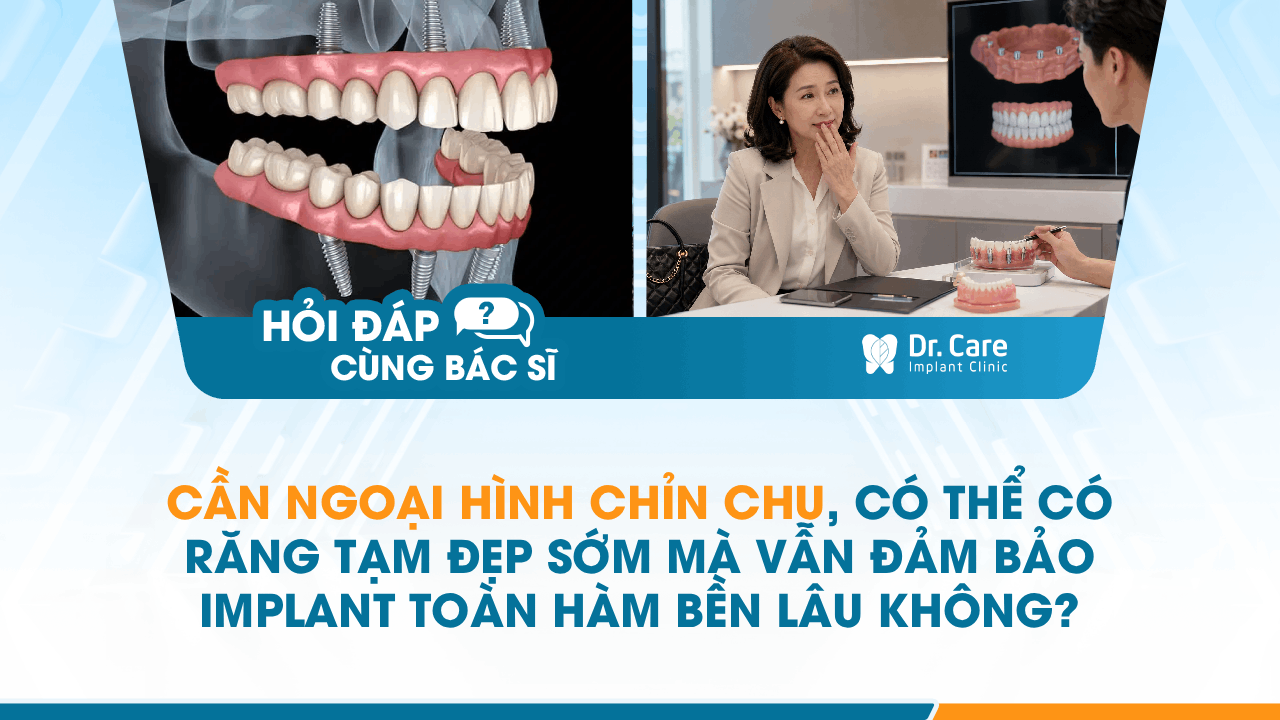
[HỎI ĐÁP BÁC SĨ]: Cần ngoại hình chỉn chu, có thể có răng tạm đẹp sớm mà vẫn đảm bảo Implant toàn hàm bền lâu không?
Cô Kim Dung 52 tuổi thường xuyên gặp đối tác nên cần phục hồi thẩm mỹ nhanh sau khi mất răng. Bác sĩ giải thích khi nào có thể thực hiện hàm tạm cố định sớm sau cấy Implant toàn hàm, vì sao hàm tạm không phải răng sau cùng, những điều kiện bắt buộc để tải lực sớm và cách dùng chính giai đoạn răng tạm để kiểm chứng nụ cười, phát âm, khớp cắn trước khi hoàn thiện bộ răng bền vững lâu dài.
[HỎI ĐÁP BÁC SĨ]: How Many Trips from the U.S. Are Usually Needed for All-on-4 Treatment in Vietnam?
David Tran, 57, has been missing most of his upper teeth for six years and is considering All-on-4 treatment in Vietnam. In an uncomplicated case, treatment can often be organized around two major trips: the first for examination, implant surgery and a provisional fixed restoration, and the second approximately 4–6 months later for the definitive prosthesis. However, severe maxillary bone loss, sinus augmentation, insufficient implant primary stability or additional healing procedures may change the schedule.
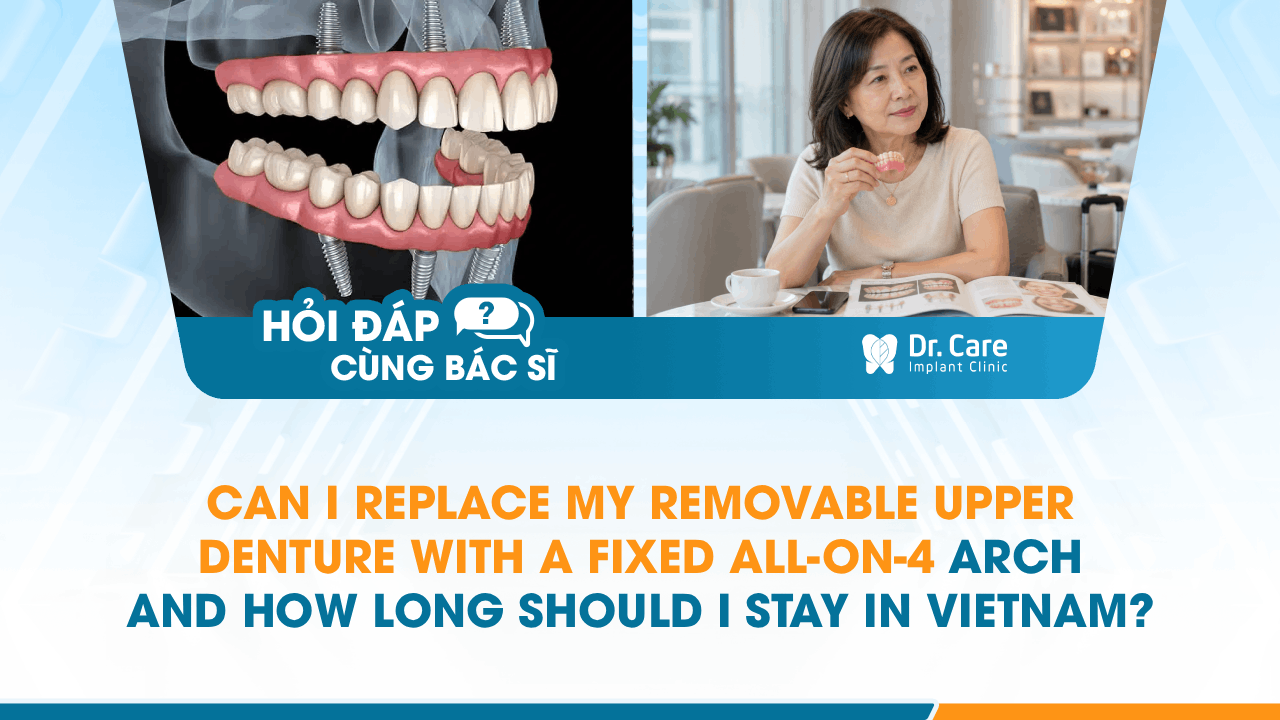
[HỎI ĐÁP BÁC SĨ]: Can I Replace My Removable Upper Denture with a Fixed All-on-4 Arch, and How Long Should I Stay in Vietnam?
Linh Pham, 54, currently wears a removable upper denture that slips while eating and is considering a fixed All-on-4 restoration in Vietnam. A fixed full-arch implant prosthesis may provide substantially greater stability and comfort when bone, sinus anatomy, restorative space and oral hygiene conditions are suitable. For an Australian patient, treatment is usually better planned as two trips rather than one continuous stay: approximately 10–14 days for implant surgery and the provisional restoration, followed by about 4–6 months of healing, then another approximately 10–14 days for the definitive full-arch prosthesis. Additional grafting or a more complex maxillary condition may change that schedule.
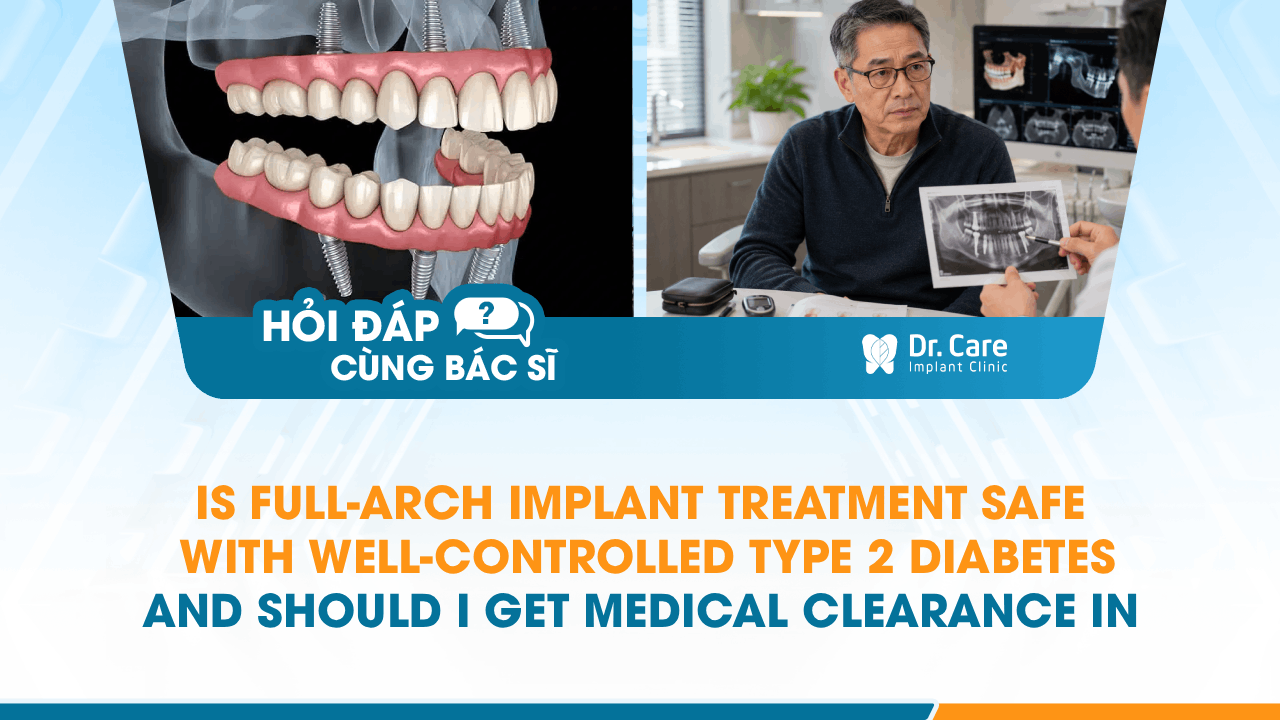
[HỎI ĐÁP BÁC SĨ]: Is Full-Arch Implant Treatment Safe with Well-Controlled Type 2 Diabetes, and Should I Get Medical Clearance in Canada First?
Robert Nguyen, 61, has reasonably well-controlled type 2 diabetes and moderate jawbone loss. Diabetes does not automatically rule out full-arch implant treatment, and implant survival can remain high when glycemic control is stable. However, because full-arch surgery is a significant elective procedure and Robert is traveling internationally, the dentist recommends obtaining an updated medical summary from his Canadian physician before traveling, including recent HbA1c, medications, diabetes-related complications and any instructions regarding food or medication around surgery.
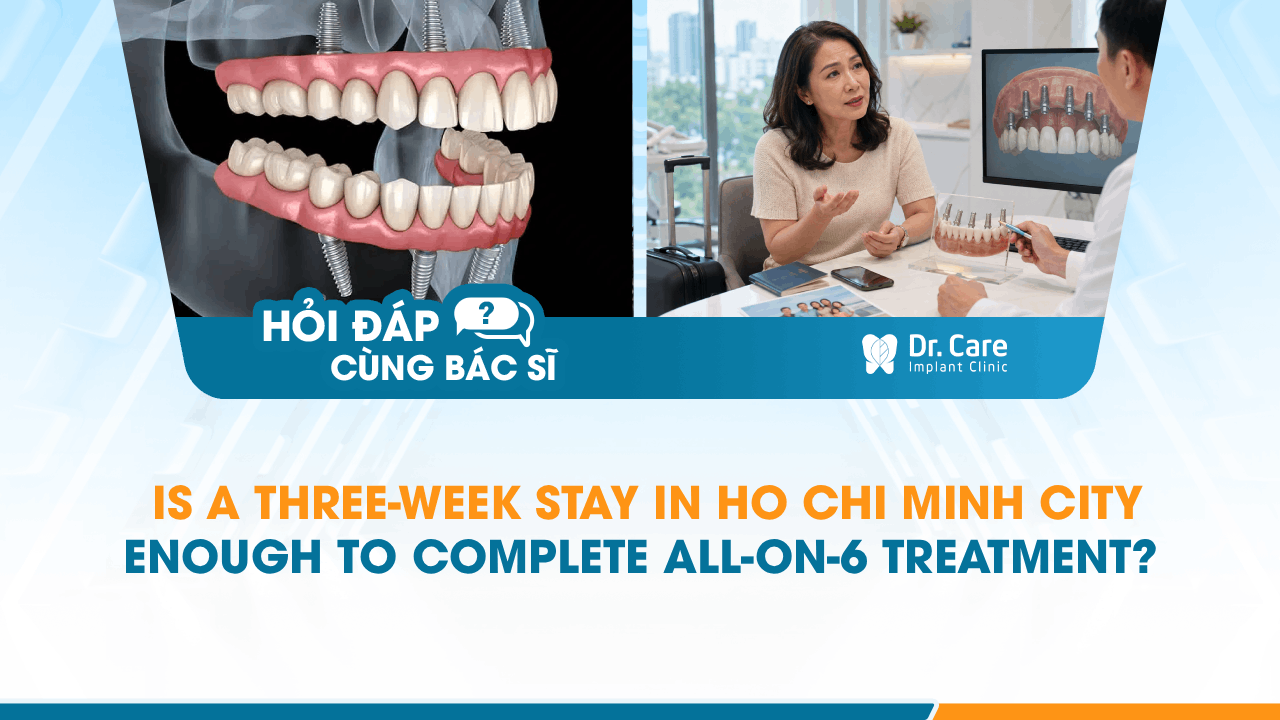
[HỎI ĐÁP BÁC SĨ]: Is a Three-Week Stay in Ho Chi Minh City Enough to Complete All-on-6 Treatment?
Kim Ngo, 49, is planning a three-week family visit to Ho Chi Minh City and wants to combine the trip with All-on-6 treatment. Three weeks is generally enough for the first treatment phase—assessment, implant surgery, provisional teeth and early bite review—if the case is suitable. However, the definitive full-arch prosthesis should normally be completed only after osseointegration, so an overseas patient should usually expect a second trip approximately 4–6 months later, often around the six-month point.
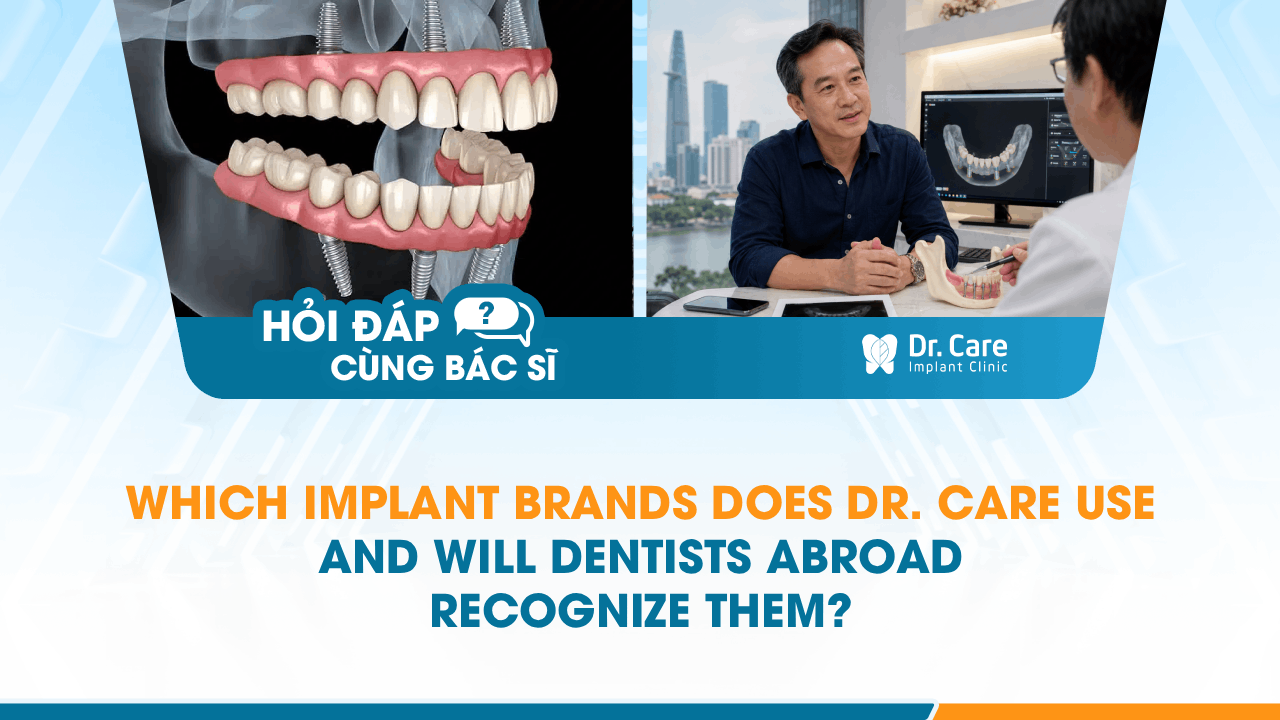
: [HỎI ĐÁP BÁC SĨ]: Which Implant Brands Does Dr. Care Use, and Will Dentists Abroad Recognize Them?
Michael Chen, 52, has lived in Ho Chi Minh City for five years and is considering full-arch treatment for extensive lower-tooth loss. Dr. Care currently offers internationally established systems including Straumann, Nobel Biocare and Neodent, as well as JDentalCare. For an expat, choosing a clinically appropriate system with broad international prosthetic support—and keeping a complete implant passport—is especially important if future maintenance or repairs may be performed in another country.