
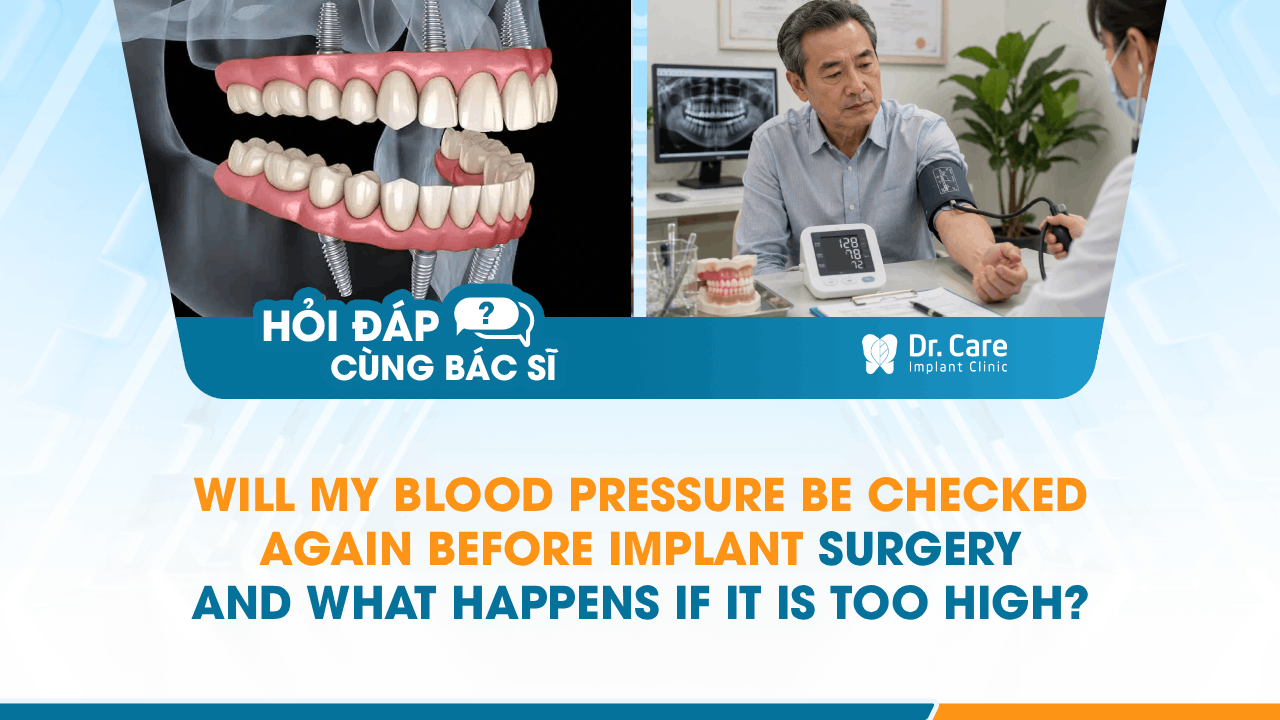
Brian Ta, 63, has hypertension and is concerned that a long flight from Canada, poor sleep and treatment anxiety could temporarily raise his blood pressure. Dr. Care’s current protocol includes reviewing hypertension, medications and vital signs before Implant surgery, with blood pressure rechecked on the treatment day. A single elevated reading does not automatically cancel surgery: the patient should rest and the measurement should be repeated correctly. If blood pressure remains around 160/100 mmHg or higher, elective full-arch surgery is generally postponed for medical review; around 180/110 mmHg or higher warrants greater caution, and very high blood pressure accompanied by chest pain, shortness of breath, neurologic symptoms or visual changes requires urgent medical assessment. Patients should not stop or double their antihypertensive medication on their own.
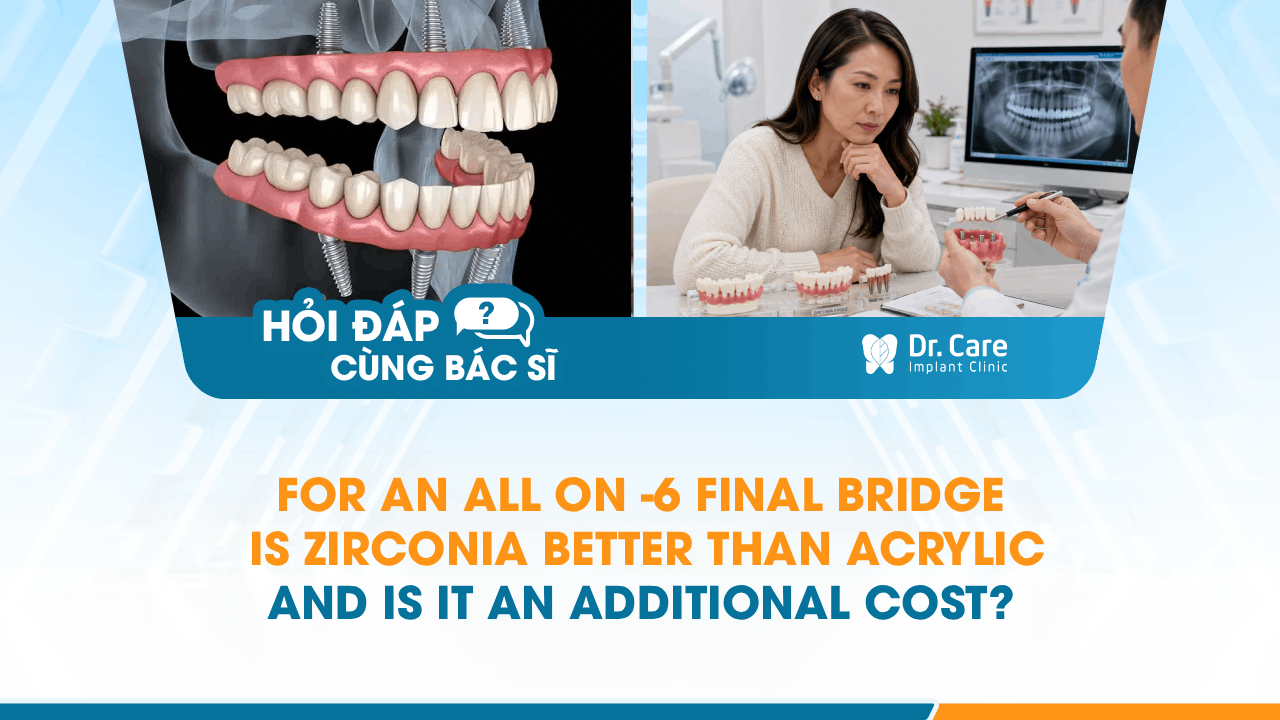
[HỎI ĐÁP BÁC SĨ]: For an All-on-6 Final Bridge, Is Zirconia Better Than Acrylic—and Is It an Additional Cost?
Jennifer Duong, 46, is comparing zirconia with acrylic/resin for the definitive fixed bridge after All-on-6 treatment. Zirconia is harder, more wear-resistant and more color-stable, while an acrylic/resin hybrid bridge is lighter, less expensive and generally easier to repair if a tooth chips or wears. Current evidence does not support saying that zirconia automatically produces better Implant survival; material choice mainly changes the prosthetic complication and maintenance profile.
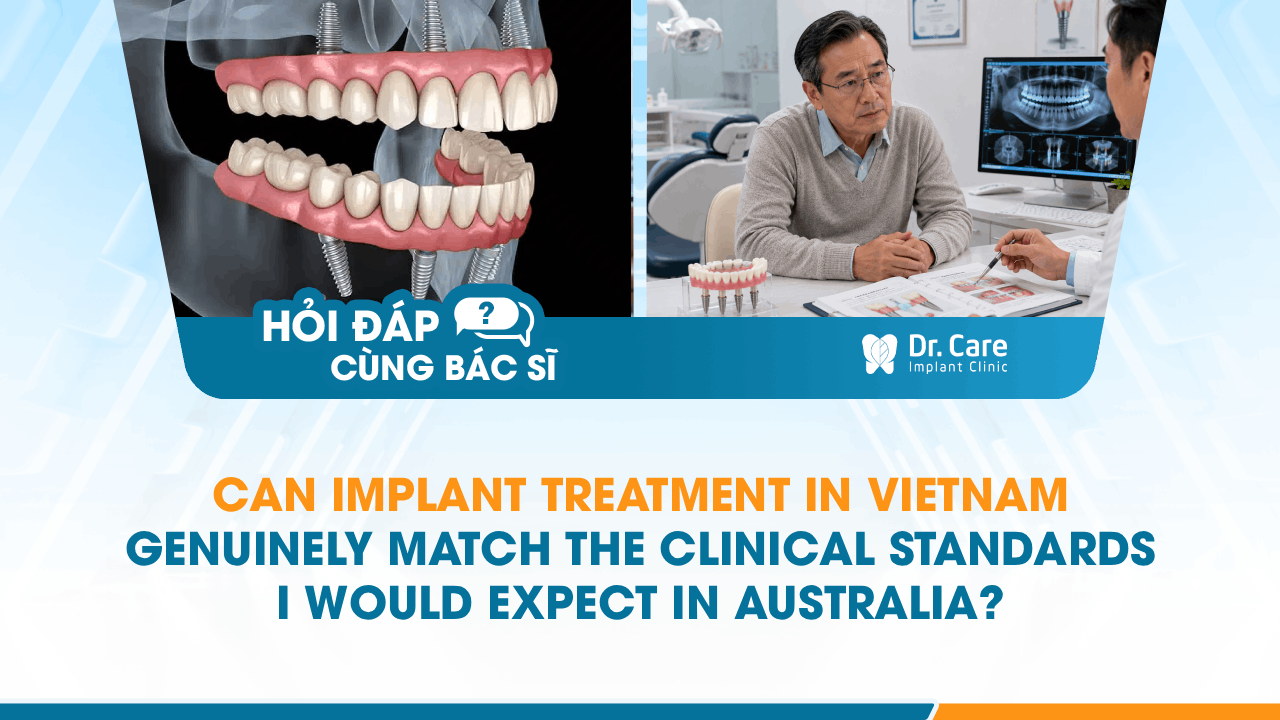
[HỎI ĐÁP BÁC SĨ]: Can Implant Treatment in Vietnam Genuinely Match the Clinical Standards I Would Expect in Australia?
Alan Chau, 67, is understandably cautious about receiving Implant treatment overseas. A lower treatment price, modern equipment or an “international standard” claim does not by itself prove that a clinic delivers care comparable to a good Australian Implant practice. The more reliable comparison is evidence-based and verifiable: legal licensing, the exact surgeon’s qualifications, CBCT-based prosthetically driven planning, infection-control procedures, genuine traceable Implant components, informed consent, a clear contingency plan, complete records and long-term follow-up.
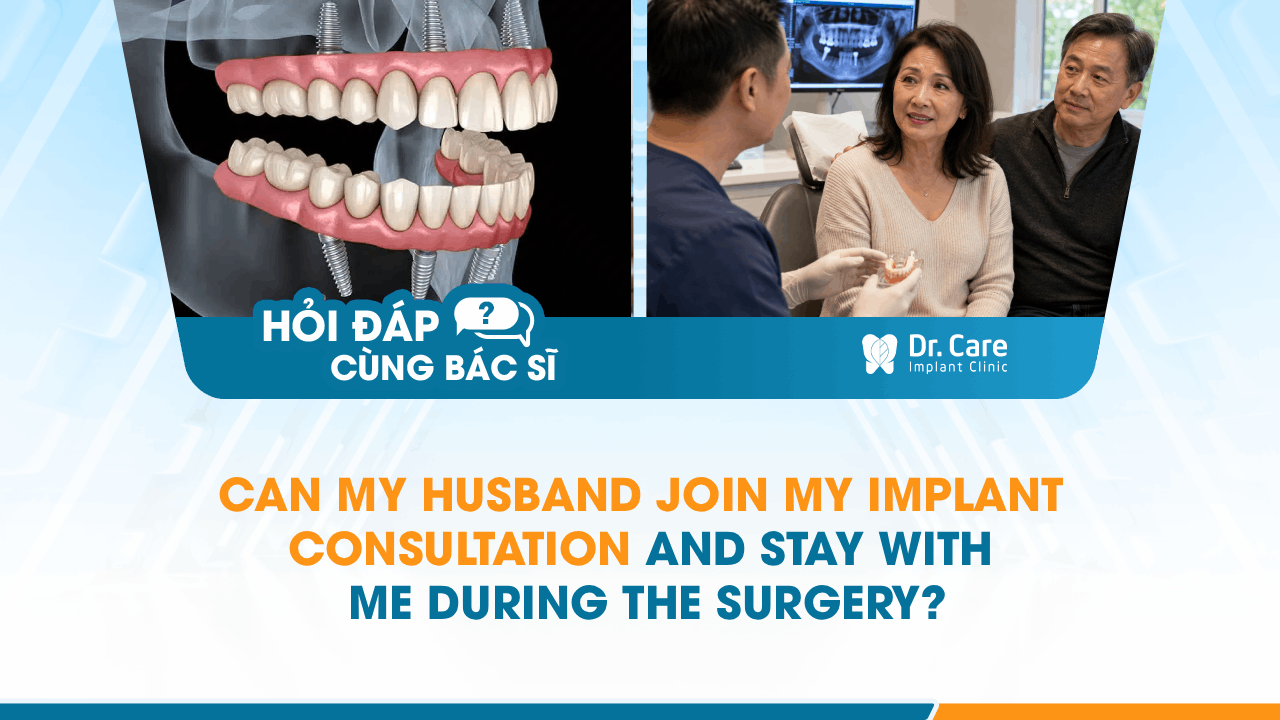
[HỎI ĐÁP BÁC SĨ]: Can My Husband Join My Implant Consultation and Stay With Me During the Surgery?
Nancy Vo, 59, would like her husband to be involved throughout her Implant treatment in Vietnam. At Dr. Care, a spouse or family member may join the consultation when the patient agrees, so he can hear the diagnosis, review the CBCT and treatment plan, understand costs and timing, and ask questions.
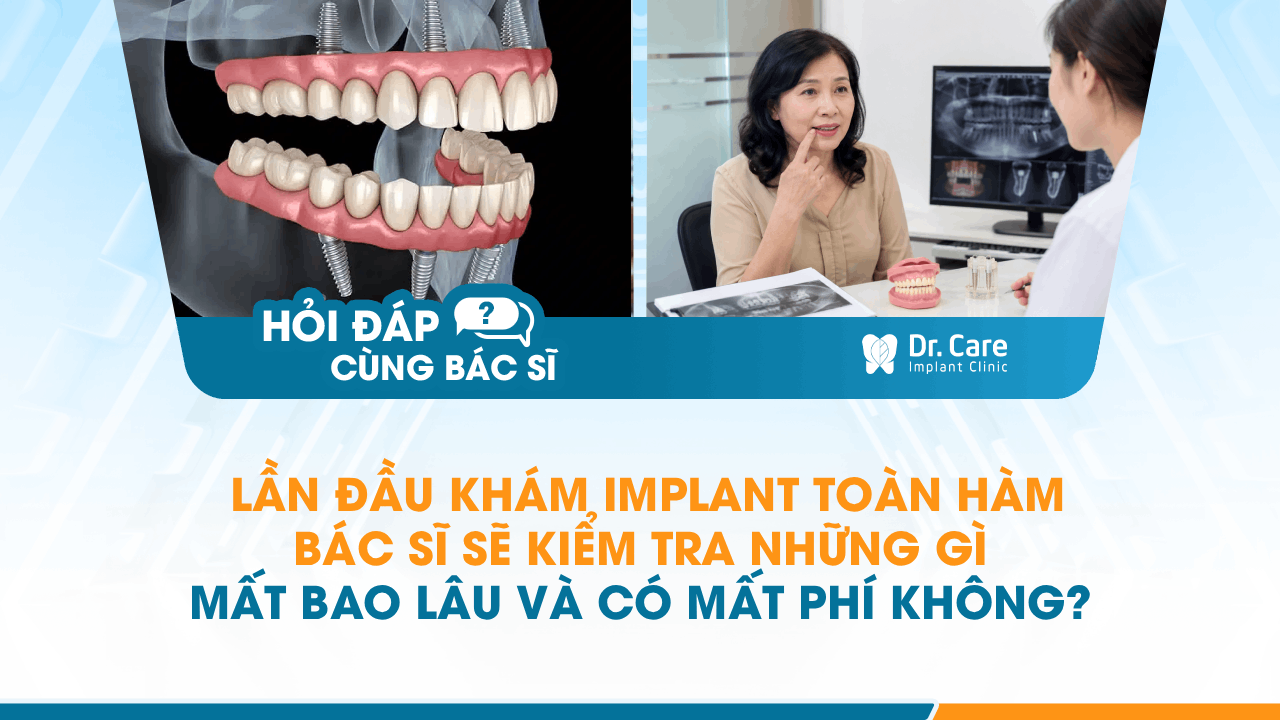
[HỎI ĐÁP BÁC SĨ]: Lần đầu khám Implant toàn hàm, bác sĩ sẽ kiểm tra những gì, mất bao lâu và có mất phí không?
Cô Bùi Thị Ngọc Hà, 55 tuổi, lần đầu tìm hiểu Implant toàn hàm nên chưa biết buổi thăm khám đầu tiên sẽ diễn ra như thế nào. Tại Dr. Care, buổi khám không bắt đầu bằng việc chọn trụ hay quyết định All-on-4/All-on-6 ngay, mà bác sĩ cần khai thác bệnh sử, khám toàn bộ răng – nướu – khớp cắn, chụp CT Cone Beam 3D để đánh giá xương, xoang hàm và dây thần kinh, sau đó mới lập phương án số trụ, phục hình, thời gian và chi phí.
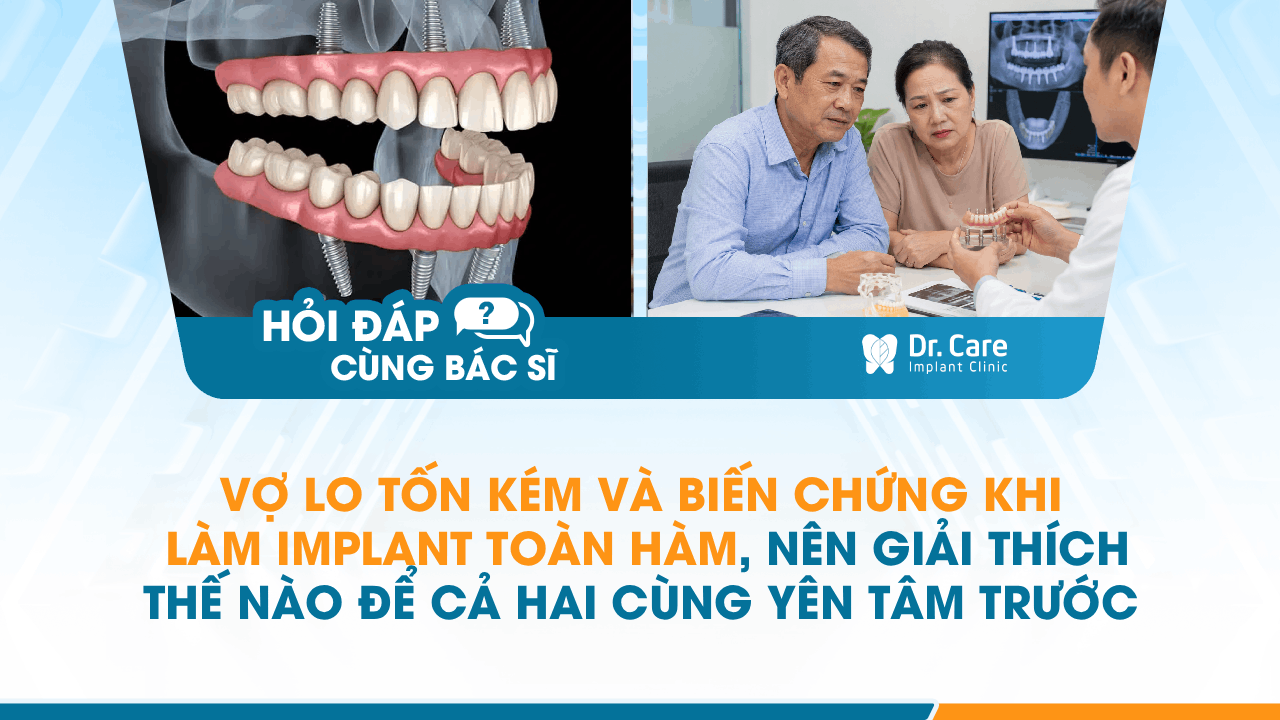
[HỎI ĐÁP BÁC SĨ]: Vợ lo tốn kém và biến chứng khi làm Implant toàn hàm, nên giải thích thế nào để cả hai cùng yên tâm trước khi quyết định?
Chú Trần Văn Lễ, 59 tuổi, muốn phục hồi Implant toàn hàm nhưng vợ chưa đồng ý vì lo chi phí lớn và nguy cơ biến chứng. Bác sĩ không khuyên Chú cố “thuyết phục” vợ bằng những lời cam kết như Implant chắc chắn thành công hay không bao giờ phát sinh. Cách tốt hơn là hai vợ chồng cùng tham gia buổi khám, xem CT 3D, nghe Bác sĩ giải thích răng nào còn giữ được, vì sao cần All-on-4 hay All-on-6, tổng chi phí từ phẫu thuật đến răng cố định sau cùng, các rủi ro có thể xảy ra và phương án xử lý nếu Implant không tích hợp.
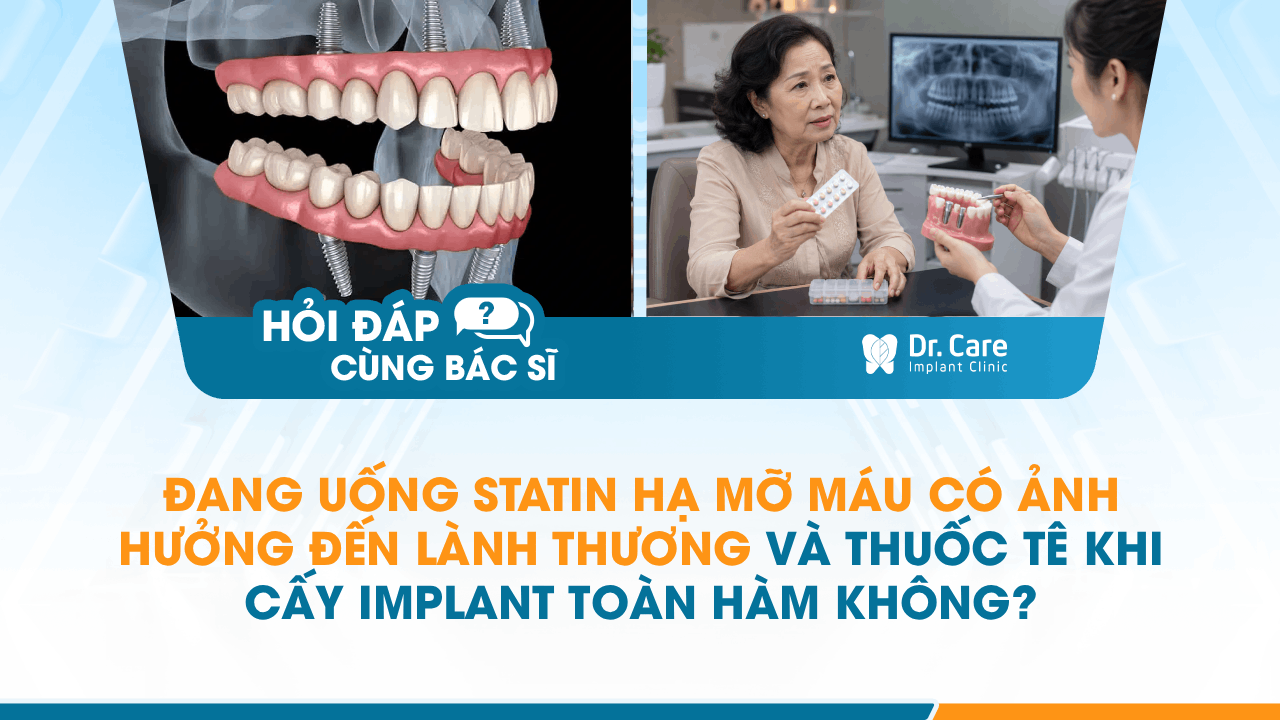
[HỎI ĐÁP BÁC SĨ]: Đang uống statin hạ mỡ máu có ảnh hưởng đến lành thương và thuốc tê khi cấy Implant toàn hàm không?
Cô Nguyễn Thị Diễm Loan, 61 tuổi, đang uống statin hạ cholesterol mỗi tối và lo thuốc có thể làm chậm tích hợp xương hoặc tương tác với thuốc tê khi cấy Implant toàn hàm. Với đa số bệnh nhân, statin không phải là thuốc làm chống chỉ định Implant và hiện chưa có bằng chứng cho thấy statin thông thường làm giảm khả năng lành thương quanh Implant; một số nghiên cứu thậm chí ghi nhận khả năng có lợi đối với chuyển hóa xương, nhưng chưa đủ để xem statin là thuốc hỗ trợ tích hợp Implant.