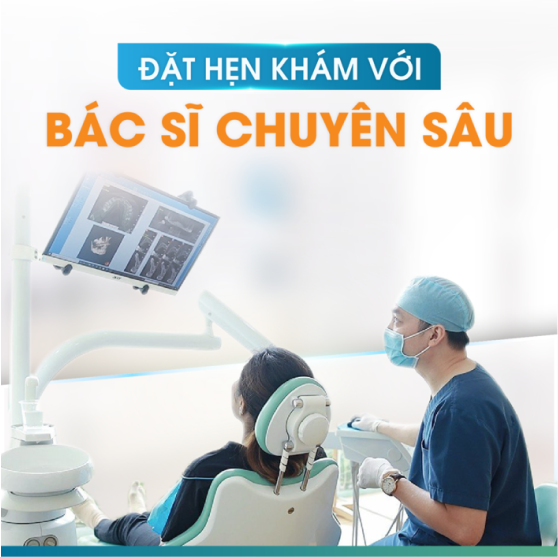
Nancy Vo, 59, would like her husband to be involved throughout her Implant treatment in Vietnam. At Dr. Care, a spouse or family member may join the consultation when the patient agrees, so he can hear the diagnosis, review the CBCT and treatment plan, understand costs and timing, and ask questions.
Nancy Vo, 59 – United States Condition: Planning Implant treatment in Vietnam and would like her husband to be actively involved in the consultation, understand the proposed treatment and remain nearby during surgery. “Can my husband stay in the room with me during the consultation and see the treatment plan, or is he only allowed in the waiting area during the actual surgery?” |
Hello Nancy. Yes. If you want your husband involved, he can normally join you for the consultation and listen to the treatment explanation with you.
In fact, for an international patient considering Implant surgery, I often think having one trusted family member present during the consultation is useful.
There can be a considerable amount of information to absorb in one appointment: your CBCT findings, the prognosis of any remaining natural teeth, number and position of implants, whether grafting is necessary, Implant system, temporary teeth, definitive teeth, healing period, cost, number of visits and postoperative care.
Your husband can listen, take notes and ask questions that you may not think of while you are concentrating on your own diagnosis.
Dr. Care's current published guidance specifically states that, when the patient agrees, a family member may join the Implant consultation to hear the treatment plan, costs and postoperative instructions.
You remain the patient, however, and the clinical discussion should still be directed primarily to you.
Your husband can support the decision, but he should not be expected to make the decision on your behalf if you are fully able to understand and consent to treatment yourself.
| Stage of your appointment | How your husband can usually participate |
| Reception and medical-history review | He can help you remember medication names, previous medical procedures and questions, although you should personally confirm your health information. |
| CBCT or diagnostic imaging | He may be asked to remain outside the imaging area according to radiation-safety and clinic workflow requirements. |
| Doctor's consultation | He may join when you give permission and can hear the diagnosis, proposed treatment, alternatives and expected timeline. |
| Treatment-plan and cost discussion | He can review the plan with you, ask about inclusions and additional costs and help compare options. |
| Implant surgery | He would normally wait outside the surgical area rather than remain beside you during the actual operation. |
| Immediately after surgery | He can receive the postoperative explanation with you and help remember medication, diet, hygiene and warning signs. |
I would particularly encourage him to join the treatment-planning discussion if you are considering full-arch treatment.
With All-on-X full-arch Implant treatment, the discussion is more complex than simply choosing four or six Implant fixtures.
The doctor should explain whether any natural teeth can still be preserved, why All-on-4, All-on-6 or another design is being proposed, whether temporary fixed teeth are possible, how long osseointegration is expected to take and what the definitive bridge will eventually be made from.
Your husband can look at the CBCT and treatment simulation with you while the doctor explains the findings.
If you are unsure about something, either of you should be able to ask the doctor to stop and explain it again in ordinary language.
For example, I would want both of you to understand that “immediate fixed teeth” and “finished treatment” are not the same thing.
If the implants achieve the appropriate primary stability, you may receive a fixed provisional restoration early in the treatment pathway.
The implants underneath still require biological healing before the definitive restoration is made.
Having your husband hear that distinction directly can prevent confusion later when you return to the United States.
The same applies to treatment alternatives.
If four implants are recommended, I would want you to understand why four are appropriate rather than simply accepting the All-on-4 label.
If six implants are recommended, the explanation should not simply be that six costs more and is therefore better.
The decision should relate to your available bone, arch form, Implant distribution, prosthetic design and bite.
| During the consultation, I would encourage both of you to understand... |
| Which teeth are healthy enough to preserve and which have a genuinely poor prognosis. |
| What the CBCT shows about bone quantity, sinus anatomy and important nerves. |
| Why the proposed Implant number and positions were selected. |
| Whether bone grafting or sinus augmentation is expected. |
| What conditions must be satisfied before a fixed provisional bridge can be loaded early. |
| The difference between provisional and definitive teeth. |
| The expected healing period and number of trips from the United States. |
| What happens if one part of the original plan has to change during surgery. |
The cost discussion is another useful time for your husband to be present.
Dr. Care's current dental Implant price list contains different Implant systems and, for full-arch cases, separate Implant and definitive-prosthetic treatment components.
If you are comparing two options, it helps to have a second person listen for exactly what is included.
You can ask whether the quotation includes the Implant stage, temporary restoration, definitive bridge, planned follow-up, and whether bone grafting, sinus treatment, navigation or another individually required procedure would appear separately.
Your husband should be able to see and discuss that information with you if you want him involved.
I would also ask the clinic to provide a written copy of the treatment plan and quotation rather than expecting either of you to remember everything verbally.
Dr. Care's current consultation process states that patients can take home their X-ray information, treatment plan, price information and relevant Implant information after the consultation.
For an overseas patient, written records are especially useful because you can review them privately after the appointment rather than feeling that you must make an immediate decision while sitting in the consultation room.
The arrangement during surgery is different.
Your husband would normally not remain in the Implant surgical room beside you.
That is not because the clinic wants to separate you from him unnecessarily.
.png)
Implant surgery requires controlled access to the operative environment, preparation of sterile instruments and materials, management of the sterile field, positioning of the surgical equipment and concentration by the treating team.
Dr. Care's current guidance for accompanying family members states that they normally wait in the reception or appropriate waiting area while Implant surgery is taking place unless the clinical team has a specific reason to arrange otherwise.
The clinic's published infection-control procedure also describes the surgical team using sterile gloves and surgical gowns, preparing a sterile operative field and controlling surgical instruments during Implant placement.
An additional person in that space who has no clinical role creates unnecessary movement and makes the sterile workflow more difficult to control.
| Why your husband normally waits outside during surgery | Clinical reason |
| Sterile-field control | The surgical team needs to control contact with sterile instruments, drapes, Implant components and the operative field. |
| Movement in the room | Limiting unnecessary traffic helps the team maintain an organized surgical environment. |
| Space around equipment | Implant surgery may involve the surgical unit, suction, monitoring equipment, imaging or navigation equipment and several members of the clinical team. |
| Communication between clinicians | The surgeon and assistants need to communicate continuously without having to simultaneously manage a family observer. |
| Patient anxiety | For some patients a spouse in the room is calming; for others, seeing the spouse react to surgical steps can actually increase anxiety. |
If you are anxious about being separated from your husband, tell the clinical team before surgery rather than waiting until you are already in the surgical chair.
There are several ways he can still support you.
He can remain with you before you enter the surgical area while the final questions and postoperative arrangements are confirmed.
He can wait nearby during the procedure according to the clinic's instructions.
After surgery, once the treating team determines that it is appropriate, he can rejoin you and listen to the postoperative instructions.
That last part is particularly useful because patients understandably do not always remember every instruction immediately after a significant procedure.
If you have received anxiety medication or any form of sedation, having a responsible adult accompany you afterward becomes even more important.
The exact escort and discharge requirements depend on the anesthesia plan, the extent of surgery and your medical condition, so they should be confirmed before the treatment date rather than assumed.
Even with ordinary local anesthesia, I think having your husband available after full-arch surgery is helpful.
You may feel tired after multiple extractions and several Implant placements even if the pain itself is controlled.
He can help you return safely to your hotel or home, collect medication, prepare appropriate food and monitor whether your early recovery is following the instructions.
I would want him to hear the warning signs directly rather than relying on you to remember them later.
| After surgery, your husband can help with... |
| Remembering the timing and purpose of prescribed medication. |
| Preparing soft foods and making sure you maintain hydration. |
| Helping you follow cleaning instructions around the surgical area or provisional bridge. |
| Watching for unexpectedly increasing swelling, bleeding, fever or drainage. |
| Noticing whether the provisional bridge feels loose or whether your bite changes significantly. |
| Helping communicate with Dr. Care if you feel unwell or are unsure about the instructions. |
There are also parts of the appointment where access may vary even though they are not surgery.
For example, your husband may be asked to remain outside the CBCT imaging area while the scan is performed.
That is normal.
He does not need to stand beside you during the scan in order to participate in the consultation.
Afterward, he can join you while the doctor displays the images and explains the treatment findings.
Similarly, there may be short clinical procedures or examinations where the treating team asks a companion to wait outside simply because of space, imaging requirements or the nature of the procedure.
I would not interpret that as excluding him from your treatment decisions.
The important point is that he should be able to participate in the parts where information and decisions are being discussed, provided that is what you want.
Your privacy still matters.
Even though he is your husband, I would want your permission before discussing your health information, treatment plan and financial details with him.
Most couples attending an Implant consultation simply make that preference clear at the beginning.
You might say, “I want my husband to be included in all discussions about my diagnosis, treatment options and costs.”
That removes ambiguity for the clinical team.
If at any point you want to discuss a medical issue privately with the doctor, you should also be able to ask for a few minutes alone.
This can matter if there is something in your medical history, medication use or personal health information that you would rather discuss directly with the clinician first.
Having a family member involved should support your autonomy, not reduce it.
For that reason, I would also avoid having your husband answer every question for you.
If the doctor asks whether you have diabetes, hypertension, a medication allergy or a previous problem with anesthesia, the answer should ideally come from you or be confirmed by you.
Your husband can help if you forget a drug name or date, but the clinical team needs to understand your own history accurately.
The same principle applies to consent.
You should personally understand the treatment being proposed, its alternatives and its important limitations before signing.
For example, if your treatment follows Dr. Care's standard clinical dental Implant protocol, the consultation should precede surgery and should establish the diagnosis, health status, CBCT findings and treatment plan before the operative phase.
Your husband can be there to help you process those decisions, but the doctor should still verify that you understand them yourself.
| Your role as the patient | Your husband's supporting role |
| Describe symptoms and medical history. | Help recall medication names, previous treatments and important questions. |
| Receive the diagnosis directly from the doctor. | Listen and take notes. |
| Understand alternatives, risks and limitations. | Ask questions or request clarification when something is unclear. |
| Decide whether to proceed with treatment. | Help you discuss the decision without replacing your consent. |
| Report how you feel after surgery. | Help observe recovery and follow the postoperative plan. |
Because you are coming from the United States, I would also use the consultation with your husband to agree on the travel plan.
He should know whether you are expected to stay in Vietnam for the first postoperative review, when the provisional restoration will be assessed, how long the Implant integration period is expected to last and when a second trip may be required for the definitive restorative phase.
If he is going to assist you during recovery, he should also know when you can fly, what type of food you should eat, what cleaning tools you need and which symptoms require local dental or medical care after you return home.
Before leaving Vietnam, I would have both of you confirm the following information:
| Before returning to the U.S., make sure both of you know... |
| Which implants and procedures were actually completed. |
| Whether the teeth you are wearing are provisional or definitive. |
| How and when medication should be taken. |
| How to clean around the implants or beneath a full-arch bridge. |
| Which foods and chewing forces should be avoided during early healing. |
| When the next follow-up is due and whether it can initially be performed remotely. |
| Which symptoms require an in-person dentist in the United States rather than a video consultation. |
| When you are expected to return to Vietnam for the next major treatment phase. |
For you, Nancy, I would therefore recommend telling Dr. Care when you book that your husband will accompany you and that you would like him included in the clinical and financial consultation.
During that appointment, he can sit with you, review the treatment plan and CBCT explanation, hear the expected timeline and costs, and ask questions with your permission.
For the actual Implant surgery, however, he should expect to wait outside the surgical area unless the treating team specifically arranges otherwise. That is the normal approach because the surgical room needs controlled access and a carefully managed sterile environment.
After the procedure, he can rejoin you when the clinical team considers it appropriate, receive the postoperative instructions and help you return safely to your accommodation.
I would especially recommend that he listen to the medication, diet, hygiene and warning-sign instructions, because that is where having a second person often provides the greatest practical benefit.
I would not promise that a particular waiting area, private room or exact access arrangement is always available without checking your treatment date. When booking, simply tell the clinic that one adult companion will accompany you and ask where he should wait during the surgical phase so the team can organize the appointment appropriately.
This consultation is general guidance only because the exact arrangements can vary according to the procedure, imaging requirements, anesthesia plan and surgical-room workflow. The clinical team should confirm the day-specific access arrangements before your procedure.
- Dr. Care Implant Clinic. Family Members During Implant Consultation and Surgery — Current Dr. Care guidance states that, with the patient's agreement, a family member can join the consultation to hear the treatment plan and costs. During Implant surgery, the family member would normally wait outside the surgical area because of sterile-field, safety and workflow requirements.
- Dr. Care Implant Clinic. Implant Examination and Consultation Process — The current consultation pathway includes medical-history collection, CBCT imaging, direct consultation with the dentist, financial consultation and treatment documentation that the patient can take home.
- Dr. Care Implant Clinic. Implant Surgical Sterility Protocol — Current Dr. Care information describes sterile gloves and surgical gowns, preparation of the surgical field and controlled surgical instrumentation during Implant procedures.
- Dr. Care Implant Clinic. All-on-X Full-Arch Implant Treatment — Current information on full-arch diagnosis, provisional treatment, healing and definitive prosthetic stages.
- Dr. Care Implant Clinic. Dental Implant Price List — Current Implant and full-arch price information that patients and accompanying family members can review as part of the treatment-planning discussion.
- Dr. Care Implant Clinic. Standard Clinical Dental Implant Protocol — Current pathway covering diagnosis, health assessment, Implant planning, surgery, healing and restorative treatment.
Thông tin liên hệ Nha khoa Dr. Care
Trồng răng Implant
Dành riêng cho Cô Chú trung niên tại Việt Nam
Hiện nay, Dr. Care - Implant Clinic là một trong những nha khoa uy tín hàng đầu cung cấp dịch vụ trồng răng Implant chuẩn Y khoa giúp khách hàng phục hồi mất răng hiệu quả và an toàn đáp ứng 3 tiêu chí: Phục hồi khả năng ăn nhai, hoàn thiện thẩm mỹ và đảm bảo sử dụng lâu bền.
Đến nha khoa, Khách hàng được Đội ngũ Bác sĩ dày dặn kinh nghiệm tư vấn tận tâm, cặn kẽ về tình trạng răng miệng. tình trạng mất răng. Bác sĩ sau khi thăm khám kỹ càng sẽ đưa ra giải pháp tối ưu, tiết kiệm và an toàn.
Không chỉ có thế mạnh về chất lượng điều trị, Dr. Care còn không ngừng cập nhật trang thiết bị hiện đại và công nghệ điều trị tối tân hỗ trợ chẩn đoán chuẩn xác, rút ngắn thời gian điều trị, nha khoa với "Liệu pháp trồng răng không đau" cho Khách hàng trải nghiệm trồng răng êm ái, thoải mái như đi spa.
Đặt hẹn với Dr. Care - Implant Clinic để thăm khám, tư vấn và điều trị. Tại đây

(*) Kết quả điều trị có thể khác nhau tùy vào thể trạng mỗi người.
![[HỎI ĐÁP BÁC SĨ]: Đang uống statin hạ mỡ máu có ảnh hưởng đến lành thương và thuốc tê khi cấy Implant toàn hàm không?](https://drcareimplant.com/upload/image/article/large/2026/08/19/2fa2042231363de7c24812ab2a3d821d.png)
![[HỎI ĐÁP BÁC SĨ]: Vợ lo tốn kém và biến chứng khi làm Implant toàn hàm, nên giải thích thế nào để cả hai cùng yên tâm trước khi quyết định?](https://drcareimplant.com/upload/image/article/large/2026/08/19/b70cb74cce75c99c97a7aa793e7758f1.png)
![[HỎI ĐÁP BÁC SĨ]: Lần đầu khám Implant toàn hàm, bác sĩ sẽ kiểm tra những gì, mất bao lâu và có mất phí không?](https://drcareimplant.com/upload/image/article/large/2026/08/19/3913ca6a88d791e13533c240b1f3acc4.png)
![[HỎI ĐÁP BÁC SĨ]: Can Implant Treatment in Vietnam Genuinely Match the Clinical Standards I Would Expect in Australia?](https://drcareimplant.com/upload/image/article/large/2026/08/19/88c96ec730a9aa79d3fe75f2eadbf0ca.png)
![[HỎI ĐÁP BÁC SĨ]: For an All-on-6 Final Bridge, Is Zirconia Better Than Acrylic—and Is It an Additional Cost?](https://drcareimplant.com/upload/image/article/large/2026/08/19/057e6ca9f9cae8ee7a9ccd5b09f03312.png)
![[HỎI ĐÁP BÁC SĨ]: Will My Blood Pressure Be Checked Again Before Implant Surgery, and What Happens If It Is Too High?](https://drcareimplant.com/upload/image/article/large/2026/08/19/b0a23f7daeb9f81537594c23668c52dc.png)