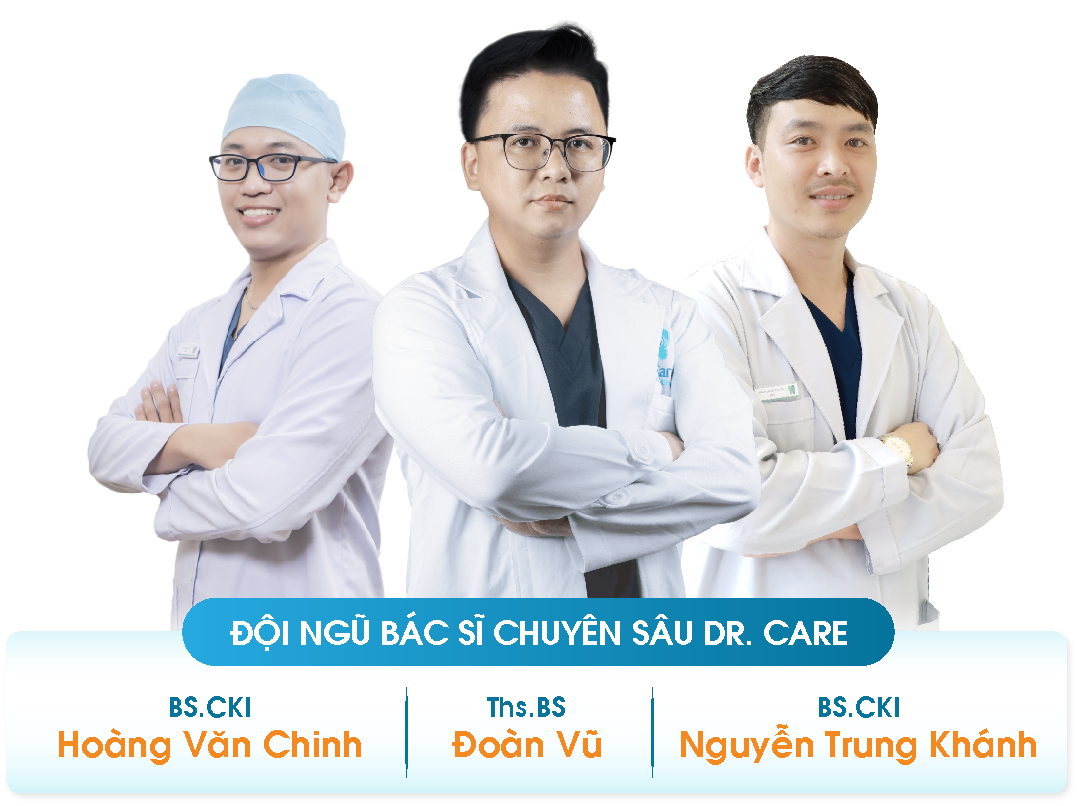
James Pham, 47, a Vietnamese-Australian from Sydney, is returning to Ho Chi Minh City specifically for dental implant treatment and needs 4 implants. Dr. Care explains what can realistically be completed within a 10-day visit, what usually requires a return visit, how costs compare with Sydney, and what records should be provided for follow-up care in Australia.
Condition: Vietnamese-Australian returning to Ho Chi Minh City for dental implant treatment, needs 4 implants "I'm coming back to Ho Chi Minh City specifically to get dental implants. I need 4 implants and in Sydney this would cost me AU$20,000+. Can you treat me within 10 days in HCMC? Please advise on what can be completed in one visit and what requires a return visit." |

Hello James, thank you for sending your question from Sydney to Dr. Care Implant Clinic in Ho Chi Minh City.
The direct answer is: within a 10-day stay in HCMC, Dr. Care may be able to complete consultation, CBCT 3D scan, intraoral scan, treatment planning, implant system selection, implant surgery for 4 implants, early post-operative review, and English treatment documentation if your case is clinically suitable. However, in most routine implant cases, the final crowns should not be completed within the same 10-day visit because the implants usually need time to heal and integrate with the jawbone before they are loaded with definitive crowns.
A 10-day visit is therefore best understood as the diagnosis, surgery, and early healing-check phase. The crown restoration phase usually requires a return visit after healing, or it may be completed by a dentist in Australia if your records are complete and the implant system is compatible with their workflow. The safest plan depends on your bone condition, missing tooth positions, whether the 4 missing teeth are adjacent or separate, whether bone grafting or sinus lift is needed, and whether temporary restorations are clinically safe.
Because you are returning specifically for dental treatment, you should send your X-rays, dental history, medical history, current medications, allergies, and travel dates before you arrive. This helps the clinic reserve enough time for examination, CT imaging, surgical planning, and early follow-up within your short stay.
| James’s question | Doctor’s short answer | Important clarification |
| Can 4 implants be treated within 10 days? | Possibly, if examination and CBCT 3D scan show favourable conditions. | Ten days may be enough for implant surgery and early review, but usually not for final crowns. |
| What can be completed in one visit? | Consultation, CT scan, planning, surgery, medication instructions, early wound check, and English records. | This assumes no major infection, severe bone loss, complex grafting, or medical issue delaying treatment. |
| What usually requires a return visit? | Implant stability check, scan/impression for crowns, final crown delivery, and bite adjustment. | Final crowns should be made after healing and implant integration are confirmed. |
| Can temporary teeth be provided? | Possibly in selected cases. | Temporary restorations must not overload newly placed implants, especially molars. |
For 4 implants, the first question is whether the missing teeth are all in one area or spread across different parts of the mouth. Four implants replacing four separate teeth may require a different plan from four implants supporting a longer bridge. If the missing teeth are molars, bite force becomes a major planning factor. If the missing teeth are in the front region, aesthetics and gum contour become more important.
At Dr. Care, the first clinical step is CBCT Cone Beam 3D imaging. This allows the doctor to assess bone height, bone width, bone quality, sinus position in the upper jaw, mandibular nerve position in the lower jaw, adjacent teeth, and prosthetic space. With 4 implants, this step is essential because each implant must be placed to support the future crown or bridge, not simply to fill a gap.
If your bone is sufficient, your gums are healthy, there is no active infection, and you do not need major bone grafting or sinus lift, implant surgery may be scheduled early during your 10-day stay. If several implant sites are straightforward, they may be treated in one surgical session, depending on your health, comfort, and the doctor’s assessment.
If the CT scan shows severe bone loss, infection, sinus involvement, thin ridge, unstable bite, or an extraction site that needs staged healing, the doctor may recommend delaying some implants or performing preparatory treatment first. This may feel less convenient, but it is safer than rushing 4 implants into poor conditions simply to fit a travel schedule.
| Clinical factor | Why it matters for 4 implants | Impact on a 10-day timeline |
| Bone volume | Each implant needs enough bone height and width for stable placement. | Good bone may allow surgery during the visit; poor bone may require grafting or staging. |
| Infection status | Active infection can affect healing and implant success. | Infection may need treatment before implant placement. |
| Missing tooth distribution | Adjacent missing teeth and separate missing teeth require different prosthetic designs. | A bridge design may reduce or change the number of implants in selected cases. |
| Bite force | Molars and patients who grind teeth place higher forces on implants. | Temporary teeth may need to be delayed or kept out of heavy bite contact. |
| Medical history | Diabetes, blood thinners, smoking, and certain medications may affect surgery and healing. | The doctor may need medical clearance or a modified plan. |
A practical 10-day plan should be arranged before you fly. If possible, send your Sydney dental records and travel dates in advance. This allows Dr. Care to pre-screen your case and prepare appointment blocks for consultation, imaging, surgery, and early follow-up. Without pre-planning, 10 days can become too tight, especially if CT findings require additional steps.
During days 1–2, the clinic should complete consultation, CBCT 3D scan, clinical examination, intraoral scan if needed, medical history review, and treatment planning. You should receive a clear written plan showing implant positions, number of implants, implant system options, estimated cost, whether bone grafting or sinus lift is expected, and what can realistically be completed during this trip.
During days 3–5, if your case is suitable, implant surgery may be performed. For 4 implants, the doctor may treat all sites in one surgical session or stage them depending on location, complexity, and your comfort. After surgery, you should rest, eat soft foods, take medication as instructed, and avoid heavy activity or long travel immediately afterward.
During days 6–10, the priority is early post-operative review. The doctor should check bleeding, swelling, pain, wound healing, sutures if used, hygiene, and any temporary restoration if provided. Before you fly back to Australia, you should receive English treatment records and a clear follow-up plan for your Sydney dentist.
| Suggested 10-day plan in HCMC | What may be completed | Important note for James |
| Before arrival | Remote pre-screening, review of old X-rays, medical history, and appointment scheduling. | Send your Sydney quote if available so the clinic can compare what is included. |
| Days 1–2 | Consultation, CBCT 3D scan, intraoral scan if needed, diagnosis, treatment plan, and written estimate. | Do not decide by price alone; decide after CT-based planning. |
| Days 3–5 | Possible implant surgery for 4 implants if clinically suitable. | If grafting, sinus lift, or infection treatment is needed, the plan may change. |
| Days 6–10 | Early review, wound check, medication guidance, hygiene instruction, and English documentation. | Do not skip the final check before flying back to Sydney. |
What can be completed in one visit? In favourable cases, the clinic may complete the surgical phase: examination, imaging, planning, implant placement, early review, and documentation. Some temporary teeth may be discussed if the case allows, but they must be designed carefully to avoid overloading the new implants. For molars, temporary restorations are often more restricted because chewing force is high.
What usually requires a return visit? The final crowns usually require a later visit after the implants have healed and integrated. At that stage, the doctor checks implant stability, gum condition, bite, and prosthetic space. Then the clinic can scan or take impressions, fabricate the crowns, try them in, adjust the bite, and deliver the final restorations.
There are three common ways to manage the crown stage. First, you can return to Dr. Care after the healing period for crown restoration. Second, you can have your Sydney dentist restore the crowns if they accept the case and have compatible components. Third, in selected cases, Dr. Care and your Australian dentist can coordinate based on detailed implant records.
If you plan to complete crowns in Australia, the implant brand and platform information become very important. Your Sydney dentist must know exactly which implant system was used, what sizes were placed, and what components are compatible. Without these records, the crown stage can become difficult or more expensive.
.png)
Regarding cost, your estimate of AU$20,000+ in Sydney is realistic for 4 implants when a single implant in Sydney may cost several thousand Australian dollars. However, you should compare complete treatment packages, not only the surgery fee. A complete implant tooth includes the implant fixture, abutment, crown, imaging, surgery, follow-up, and sometimes additional procedures depending on the case.
At Dr. Care, the listed price for one complete implant tooth includes the implant fixture, customized abutment, and Zirconia Sagemax crown. The reference price depends on the implant system. Additional procedures such as bone grafting, sinus lift, extraction of infected roots, periodontal treatment, temporary restoration, guided surgery, or navigation-assisted surgery may change the final cost.
If all 4 missing teeth are restored with 4 separate implants and crowns, the reference cost can be estimated by multiplying the single-tooth implant package by 4. If the missing teeth are adjacent, the doctor may evaluate whether a bridge on implants is more appropriate, but this must be decided from the CT scan, bite, bone condition, and hygiene design.
A lower price in Vietnam can be a strong advantage, but it should not be the only decision factor. You should choose based on proper diagnosis, authentic implant systems, surgical safety, crown design, English records, and a follow-up plan after you return to Australia.
| Implant system at Dr. Care | Reference price for 1 complete implant tooth | Estimated total for 4 complete implant teeth | Clinical note for James |
| Osstem, Korea | 19,000,000 VND/tooth | About 76,000,000 VND | A cost-controlled option when bone condition is favourable and standard healing is acceptable. |
| Dentium, USA | 22,000,000 VND/tooth | About 88,000,000 VND | A balanced option for cost, stability, and restorative planning. |
| Neodent, Switzerland | 30,000,000 VND/tooth | About 120,000,000 VND | A Straumann Group option that may be useful when international documentation matters. |
| Straumann SLA, Switzerland | 35,500,000 VND/tooth | About 142,000,000 VND | Worth considering for patients who prioritise a long-established Swiss implant system. |
| Straumann SLActive / Nobel Active | 40,500,000 VND/tooth | About 162,000,000 VND | Suitable when clinical conditions and budget support a higher-end implant system. |
For an Australian patient, documentation is not optional. If you return to Sydney before the crowns are completed, your dentist needs clear information. Dr. Care can prepare English records, including diagnosis, treatment plan, implant positions, implant brand, implant diameter and length, platform information, surgery date, medication instructions, post-operative care, and recommended timing for crown restoration.
You should also request radiographs or CBCT information where available. Depending on file format, the clinic can provide selected CBCT screenshots, post-operative X-rays, intraoral photos, and treatment notes. If your Sydney dentist will restore the crowns, implant system and platform information are essential for choosing the correct components.
If you already have a dentist in Sydney, ask whether they are willing to restore implants placed overseas. Some dentists may accept the case if documentation is complete and the implant system is recognised. Others may prefer that the surgical clinic also completes the crowns. It is better to confirm this before starting treatment in Vietnam.
You should keep both digital and printed copies of your records. Digital copies can be emailed to your Australian dentist. Printed copies are useful if you need urgent dental care during travel or shortly after returning home.
| English records for Sydney follow-up | What they should include | Why they matter |
| Treatment summary | Diagnosis, treated areas, surgical date, procedures performed, and next-stage plan. | Helps your Australian dentist understand what was completed in Vietnam. |
| Implant details / implant passport | Brand, system, diameter, length, platform, and lot/serial information if available. | Essential for abutment, crown, screw, and future maintenance compatibility. |
| Radiographs / CBCT information | Pre-op and post-op images or selected CBCT screenshots where available. | Allows your Sydney dentist to evaluate implant position and healing. |
| Temporary restoration note | Whether temporary teeth were provided and whether they are in or out of bite contact. | Helps prevent accidental overloading during healing. |
| Follow-up timeline | Recommended review dates, healing period, and timing for crowns. | Prevents delayed or premature restoration after you return to Australia. |
Remote support can help after you return to Sydney. You may send photos, describe pain or swelling, ask about cleaning, and confirm the next follow-up steps. However, remote support cannot replace direct examination when a physical adjustment, X-ray, or urgent care is required. If you develop increasing pain, swelling, pus, fever, bleeding that does not settle, or a loose temporary restoration, you should see a local dentist in Australia promptly.
Before leaving Vietnam, ask Dr. Care three practical questions: when should I send my first post-operative photo, what symptoms require urgent care in Sydney, and when should I return for crowns or ask my Australian dentist to take over? These questions make the follow-up plan safer and clearer.
If the crowns are completed later at Dr. Care, you will need a return visit for implant stability check, scan or impression, crown fabrication, try-in, and bite adjustment. If the crowns are completed in Sydney, your Australian dentist will need complete records and compatible components. Both options can be considered, but they should be planned before the surgery.
For your 10-day trip, the best goal is not to “finish everything quickly”; the best goal is to complete the surgical phase safely and leave with a clear, documented plan for the restoration phase.
| Return-visit decision | If you return to Dr. Care | If your Sydney dentist completes crowns |
| Implant stability check | Checked by the same team that placed the implants. | Requires clear records and local clinical assessment. |
| Scan/impression | Completed using Dr. Care’s planned restorative workflow. | Your dentist must have compatible scan bodies or impression components. |
| Final crowns | Designed and adjusted according to the original surgical-prosthetic plan. | Possible if the dentist accepts the case and has correct component information. |
| Bite adjustment | Adjusted directly by the treating team before you leave Vietnam again. | Must be done carefully to avoid overloading the implants. |
The doctor’s practical recommendation for you is: yes, 4 implants may be treated within a 10-day stay in HCMC if the CT scan and clinical examination show favourable conditions. In one visit, you may complete consultation, CBCT 3D scan, treatment planning, implant surgery, early wound review, medication guidance, and English documentation. The final crowns usually require a return visit after healing or coordinated restoration with your Sydney dentist.
Your AU$20,000+ estimate in Sydney is understandable, but do not choose Vietnam only because of price. Choose based on complete treatment value: CT-based planning, appropriate implant system, sterile surgery, realistic timeline, clear records, and a safe follow-up plan. For an international patient, proper documentation and coordination after returning home are just as important as the surgery itself.
This answer is for general guidance. To know whether your 4 implants can be placed during your 10-day stay, Dr. Care needs to examine you directly, take a CBCT 3D scan, identify the missing tooth positions, assess bone and gum condition, review your medical history, and clarify whether final crowns will be completed in Vietnam or Australia.
- Sydney Implant Studio. Dental Implant Cost Sydney: Real 2026 Price Breakdown — Reference cost range for single-tooth implants in Sydney
- Dr. Care Implant Clinic. Bảng giá cấy ghép Implant chuẩn y khoa tại Dr. Care — Reference prices for complete single implant teeth
- Dr. Care Implant Clinic. Cách đọc bảng báo giá Implant — Implant fixture, customized abutment and zirconia crown cost structure
- International Team for Implantology. Implant Placement and Loading Protocols — Consensus Statement
- Group 5 ITI Consensus Report: Implant placement and loading protocols — Clinical Oral Implants Research / PubMed
- U.S. Food & Drug Administration. Dental Implants: What You Should Know — Dental Devices Safety Information
- Healthdirect Australia. Dental implant procedure — Australian patient information on dental implants
- Bộ Y tế Việt Nam. Hướng dẫn quy trình kỹ thuật chuyên ngành Răng Hàm Mặt — Clinical procedure guidance
Thông tin liên hệ Nha khoa Dr. Care
Trồng răng Implant
Dành riêng cho Cô Chú trung niên tại Việt Nam
Hiện nay, Dr. Care - Implant Clinic là một trong những nha khoa uy tín hàng đầu cung cấp dịch vụ trồng răng Implant chuẩn Y khoa giúp khách hàng phục hồi mất răng hiệu quả và an toàn đáp ứng 3 tiêu chí: Phục hồi khả năng ăn nhai, hoàn thiện thẩm mỹ và đảm bảo sử dụng lâu bền.
Đến nha khoa, Khách hàng được Đội ngũ Bác sĩ dày dặn kinh nghiệm tư vấn tận tâm, cặn kẽ về tình trạng răng miệng. tình trạng mất răng. Bác sĩ sau khi thăm khám kỹ càng sẽ đưa ra giải pháp tối ưu, tiết kiệm và an toàn.
Không chỉ có thế mạnh về chất lượng điều trị, Dr. Care còn không ngừng cập nhật trang thiết bị hiện đại và công nghệ điều trị tối tân hỗ trợ chẩn đoán chuẩn xác, rút ngắn thời gian điều trị, nha khoa với "Liệu pháp trồng răng không đau" cho Khách hàng trải nghiệm trồng răng êm ái, thoải mái như đi spa.
Đặt hẹn với Dr. Care - Implant Clinic để thăm khám, tư vấn và điều trị. Tại đây

(*) Kết quả điều trị có thể khác nhau tùy vào thể trạng mỗi người.
![[HỎI ĐÁP BÁC SĨ] - Irish ESL teacher in HCMC: Can foreign residents get payment plans and English invoices for All-on-4?](https://drcareimplant.com/upload/image/article/large/2026/06/25/27e47cca5efbd303e9c982b1554a95ac.png)
![[HỎI ĐÁP BÁC SĨ] - Irish ESL teacher in HCMC: Can foreign residents get payment plans and English invoices for All-on-4?](https://drcareimplant.com/upload/image/article/large/2026/06/25/b780ce1d7fd42846e271a1aeea46fbe7.png)
![[Hỏi đáp bác sĩ] - Ở Singapore bay về TP.HCM cuối tuần, có làm trọn quy trình Implant được không?](https://drcareimplant.com/upload/image/article/large/2026/06/25/7e24a3c904bc00979d2ac843db617cba.png)
![[Hỏi đáp bác sĩ] - Việt kiều Nhật về TP.HCM 3 tuần: Implant Straumann giá bao nhiêu và có hồ sơ tiếng Nhật không?](https://drcareimplant.com/upload/image/article/large/2026/06/25/db9827756721bbcf918035fe5f39bcba.png)
![[HỎI ĐÁP BÁC SĨ] - British tourist in HCMC: Can a single dental implant be done during a 2-week stay?](https://drcareimplant.com/upload/image/article/large/2026/06/25/7614de8f08f5095d0e1939dedd6d7a73.png)
![[Hỏi đáp bác sĩ] - Việt kiều Pháp về hưu: All-on-6 Neodent tại TP.HCM chênh lệch bao nhiêu so với Paris?](https://drcareimplant.com/upload/image/article/large/2026/06/25/2001ecd0e3f52a8e717ee8e5fbe16fc6.png)