Mai Truong, 45, grew up in Canada and is no longer fully comfortable discussing complex medical and dental information in Vietnamese. Dr. Care currently provides English consultation support and can prepare treatment documentation in English for international patients. However, Mai should request English-language support when booking rather than assume every staff member has the same level of fluency. Before consenting to Implant treatment, she should be able to understand her CBCT findings, treatment alternatives, Implant system, surgical risks, provisional and final prosthetic stages, costs, healing timeline, follow-up requirements and contingency plans entirely in the language she is most comfortable using.
|
Mai Truong, 45 – Canada Condition: Left Vietnam as a child and now has limited confidence discussing complex dental and medical information in Vietnamese. Mai wants to know whether her Implant consultation, treatment plan and follow-up instructions can be explained clearly in English. “My Vietnamese is a bit rusty since I left as a child. Will the doctors and staff be able to explain the whole treatment plan to me clearly in English?” |
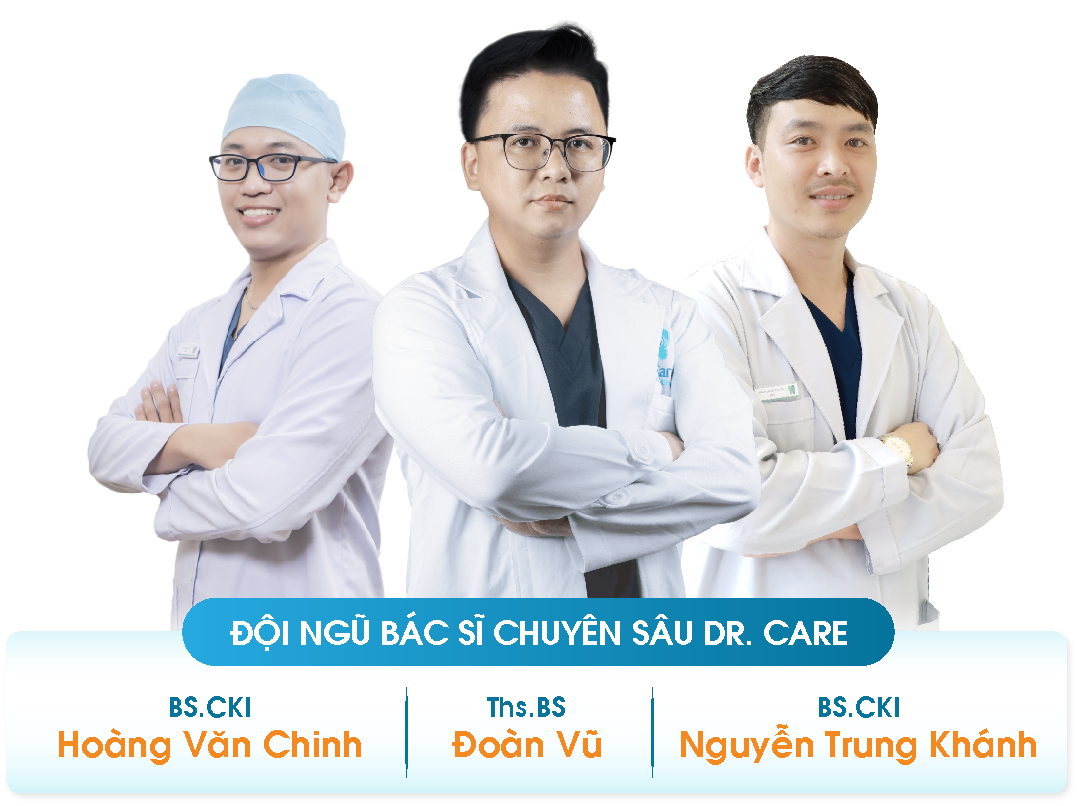
Hello Mai. Yes. Dr. Care currently provides English consultation support for international patients and expatriates, and an English treatment summary and Implant records can also be prepared.
I would make one practical recommendation, though: when you book the appointment, tell the clinic in advance that you would like the consultation and treatment explanations in English.
I would not want you to rely on the assumption that every member of staff has exactly the same level of English fluency. The important point is that an English-speaking clinical consultation can be arranged so that the doctor can discuss your diagnosis and treatment directly with you in the language you understand best.
For Implant treatment, especially an All-on-4, All-on-6 or other complex restorative case, being able to exchange greetings in English is not enough.
You should understand why a particular treatment is being recommended, what alternatives exist, what your CBCT shows, which Implant system will be used, whether grafting is necessary, what will happen during surgery, what type of temporary teeth you may receive, when the definitive prosthesis is made, how much each stage costs and what happens if the original plan has to change.
If those points are not completely clear to you in Vietnamese, then I would prefer to explain them in English rather than have you sign a treatment plan based on partial understanding.
| Your question | What I would recommend |
| Can the Implant consultation be conducted in English? | Yes. Dr. Care currently states that English consultation support can be arranged for international and expatriate patients. |
| Can the treatment plan be explained in English? | Yes. The explanation should cover both surgical and prosthetic treatment rather than only the Implant price. |
| Can treatment documents be prepared in English? | Yes. An English treatment summary and Implant records can be prepared for international patients. |
| Should you tell the clinic before arriving? | I recommend doing so. This allows the appropriate English-speaking clinical support to be arranged for the appointment. |
| Do you still need to understand technical terms? | You do not need to become an Implant expert. The doctor's responsibility is to translate technical findings into clear, understandable language before you decide. |
The first part of an English consultation should be your diagnosis.
For example, if you are missing several teeth, I would not simply say, “You need implants.”
I would show you which teeth are missing, which remaining teeth are healthy enough to preserve, which teeth—if any—have a poor prognosis, and what the available treatment alternatives are.
If you still have maintainable natural teeth, I would explain why preserving them may be preferable to extracting them.
If the remaining dentition is genuinely terminal and an All-on-X full-arch implant treatment is being considered, you should understand why the case is being planned as a complete arch rather than as several individual implants.
The second part should be your CBCT findings.
Dr. Care uses CT Cone Beam 3D as part of Implant diagnosis and treatment planning. Rather than simply showing you a scan full of unfamiliar grey images, the doctor should explain what is clinically important.
You should know how much bone is available, whether the bone distribution is favorable, where important anatomical structures are located and whether additional procedures such as bone augmentation or sinus elevation are likely to be required.
For the lower jaw, this may include explaining the position of the inferior alveolar nerve and mental foramina.
For the upper jaw, the discussion may include the maxillary sinus and the amount of posterior bone remaining.
| What should be explained in English? | What you should understand before treatment |
| Diagnosis | Which teeth are healthy, which are compromised, what has caused the tooth loss and whether disease must be treated first. |
| CBCT findings | Available bone, important nerves or sinus anatomy and any anatomical limitation affecting Implant placement. |
| Treatment alternatives | Why an individual Implant, bridge, removable prosthesis, All-on-4, All-on-6 or another approach is being recommended. |
| Implant system | Manufacturer, proposed Implant line and why that system is suitable for your case. |
| Additional procedures | Whether extractions, bone grafting, sinus elevation or another procedure is needed and why. |
| Temporary versus definitive teeth | Which restoration you will receive during healing and when the long-term prosthesis is expected. |
| Risks and contingency plans | What may change if Implant stability, bone conditions or healing do not match the original expectation. |
| Cost | What is included, what is not included and which potential additional procedures can increase the total. |
| Aftercare | Medication, hygiene, diet, activity restrictions, follow-up and warning signs requiring urgent review. |
The distinction between temporary and final teeth is particularly important for international patients.
Terms such as “immediate teeth,” “same-day teeth,” “temporary bridge,” “definitive bridge,” “immediate loading” and “osseointegration” can be easily misunderstood even by someone who speaks conversational Vietnamese very well.
For example, receiving fixed provisional teeth shortly after Implant placement does not mean the Implant treatment is biologically complete.
.png)
The implants still need time to integrate with the bone.
Your temporary restoration is used during that healing phase, whereas the definitive prosthesis is produced later after the clinical team confirms that the implants are ready for the final restorative stage.
I would want that difference explained to you clearly in English before surgery rather than after you have already booked your return flight.
The same applies to All-on-4 versus All-on-6.
If you are considering full-arch treatment, I would explain that six implants are not automatically better simply because there are two more fixtures.
The decision should depend on the final prosthetic plan, available bone, Implant distribution, bite, hygiene requirements and other clinical factors.
You should be able to ask, in English, “Why are you recommending four instead of six?” and receive an answer based on your own CBCT rather than a sales explanation based on package price.
Cost should also be discussed in English before you commit.
Dr. Care's current dental implant price list includes different Implant systems and different costs for individual and full-arch treatment.
The final cost can also change if you require additional procedures such as extraction, bone grafting or sinus augmentation.
So I would want you to understand not only the total number at the bottom of the quotation but how that number was calculated.
| Before accepting a quotation, you should be able to answer | Why it matters |
| How many implants are being proposed? | Confirms the actual surgical plan rather than relying on a package name. |
| Which Implant brand and system will be used? | Important for clinical planning, warranty and future international servicing. |
| Does the price include the definitive prosthesis? | Full-arch Implant and final prosthetic costs may be listed separately. |
| Is grafting included? | Bone augmentation is not required for every patient and should be identified individually. |
| What additional charges could realistically occur? | Allows you to plan finances before treatment rather than being surprised during the surgical phase. |
| How many trips or treatment phases are expected? | Particularly important if you are returning to Canada between surgery and the definitive prosthetic phase. |
Dr. Care's current price information states that after CBCT and clinical examination, the doctor explains the proposed number of implants, expected materials, treatment duration and estimated cost by treatment item before the patient decides to proceed.
That is exactly the type of discussion I would want conducted in English for you.
If something is unclear, ask the doctor to explain it again in simpler language.
You should feel comfortable saying, “I understand that you recommend this option, but can you explain why the alternative is not suitable for me?”
That is not being difficult.
It is an appropriate part of making an informed healthcare decision.
I would also recommend using a simple confirmation method at the end of the consultation.
Rather than the doctor asking only, “Do you understand?”, you can summarize the plan back in your own words.
For example:
“So my understanding is that you are recommending four implants in the lower jaw, I will receive temporary fixed teeth first if the implants are stable enough, I will heal for several months, and then I return for the definitive bridge. Bone grafting is not currently planned but may change if the surgical findings differ from the CBCT. Is that correct?”
If the doctor confirms or corrects your summary, both sides know that the important information has actually been understood.
This is particularly useful when English is your stronger language but you still understand some Vietnamese. Patients sometimes switch back and forth between the two languages and assume they have understood a technical term because it sounds familiar.
I would rather clarify it than rely on that assumption.
Your medical history should also be reviewed in English.
If you take medication for diabetes, hypertension, osteoporosis, heart disease, blood thinning or another chronic condition, make sure you provide the exact English drug names and doses.
Many prescription medications have different trade names in different countries.
Bringing a medication list from Canada, ideally with generic drug names, is much safer than trying to translate the name from memory.
The same applies to allergies, previous surgery and anesthesia history.
If you tell the dentist that you once “had a reaction to anesthesia,” the doctor should clarify whether you mean nausea, fainting, palpitations, an allergic reaction, difficulty breathing or another event.
Those distinctions can affect the treatment plan.
Dr. Care's current English-support information for expatriate patients states that the initial consultation can cover medical history, medications, allergies, smoking, diabetes, cardiovascular conditions, previous dental treatment, denture use and patient expectations.
For an international patient, that clinical discussion is more important than simply having an English-speaking receptionist.
You need English at the points where medical and treatment decisions are being made.
| Stage | English support is particularly important for... |
| Initial consultation | Medical history, dental history, diagnosis, expectations and treatment alternatives. |
| CBCT review | Bone anatomy, nerve/sinus location, Implant positions and need for additional procedures. |
| Treatment-plan approval | Implant system, surgical stages, temporary and final prosthetics, timeline and total cost. |
| Before surgery | Medication instructions, fasting or sedation instructions if applicable, risks and consent. |
| After surgery | Pain control, medication, swelling, diet, cleaning, warning signs and emergency contact instructions. |
| Before returning to Canada | Healing status, next treatment stage, remote follow-up and what your Canadian dentist should monitor. |
English documentation is also important once you leave the clinic.
Dr. Care currently states that English treatment summaries and Implant records can be prepared for international patients.
For a more complex Implant case, I would want your records to include your diagnosis, Implant system, Implant positions, radiographs, surgery notes, prosthetic plan and follow-up schedule.
If you eventually need maintenance in Canada, those records allow your local dentist to understand what was performed without relying on your memory or translating Vietnamese documents.
For a full-arch restoration, I would also request the exact Implant system and relevant prosthetic-component information so that a future Implant dentist can identify the restoration properly.
That is particularly useful if a screw or prosthetic component ever requires service years later.
Your written postoperative instructions should also be available in English.
You may feel completely comfortable immediately after the appointment and then realize later at your hotel that you cannot remember whether the dentist said to begin a medication that evening or the following morning.
Written instructions reduce that problem.
For an overseas patient, I would want the instructions to state the medication schedule, diet, hygiene, expected swelling, activities to avoid, the date of the next review and which symptoms require urgent contact.
If treatment involves several stages, your English treatment summary should also distinguish what has already been completed from what remains.
For example, if you leave Vietnam with a provisional fixed full-arch bridge, your Canadian dentist should know that the definitive restoration has not yet been completed.
The clinic's standard clinical dental implant protocol includes diagnosis, Implant placement, healing and restorative stages. An English summary should make your position within that sequence clear.
I would also encourage you to bring a family member if that makes you more comfortable, but I would not rely on a relative as the sole interpreter for a complex Implant consultation when direct English clinical communication can be arranged.
A family member can help remember questions, take notes and support you emotionally.
However, you should be able to hear the diagnosis and answer medical questions directly yourself whenever possible.
You may also want to prepare your questions before the appointment.
| Useful questions to ask in English | What the answer should clarify |
| “Can you show me on the CBCT why you recommend this Implant position?” | Links the proposed surgery to your actual anatomy. |
| “Are any of my remaining natural teeth worth keeping?” | Ensures full-arch treatment is not being chosen simply for convenience. |
| “Why All-on-4 rather than All-on-6, or vice versa?” | Tests whether Implant number is based on clinical planning rather than package selection. |
| “Will I receive provisional or definitive teeth during this visit?” | Prevents confusion about immediate-loading terminology. |
| “What could make the plan change during surgery?” | Clarifies the contingency plan if bone or Implant stability differs from expectations. |
| “What is included in this price and what might cost extra?” | Clarifies the financial commitment before consent. |
| “What records will I take back to Canada?” | Ensures continuity of long-term follow-up. |
For you, Mai, the fact that your Vietnamese is rusty should therefore not be a reason to avoid Implant treatment in Vietnam.
But it is a good reason to make English communication part of your treatment planning from the beginning.
When booking, I would write clearly that you are a Vietnamese Canadian patient who prefers medical and dental explanations in English and would like the Implant consultation conducted in English.
I would also request English treatment documentation if you expect to continue routine follow-up with a dentist in Canada.
During the consultation, do not hesitate to stop the conversation whenever a technical term is unclear.
The objective is not for you to understand every engineering detail of Implant dentistry.
The objective is for you to understand enough to make a genuine decision: what condition you have, what Bác sĩ proposes to do, why that option is being recommended, what reasonable alternatives exist, what risks and limitations apply, what the treatment will cost, how long it will take and what you will need to do afterward.
If all of those points are clear in English, your limited Vietnamese fluency should not prevent you from participating fully in your treatment decisions.
This consultation is general guidance only because I have not yet examined your teeth or CBCT. When you schedule your appointment, I recommend specifically requesting an English-language Implant consultation so the appropriate doctor and support can be arranged, rather than assuming that every staff member will have the same level of English fluency.
- Dr. Care Implant Clinic. English Consultation and Treatment Documentation for International Patients — Dr. Care currently states that English consultation support can be arranged for expatriate and international patients and that English treatment summaries and Implant records can be prepared.
- Dr. Care Implant Clinic. English-Language Implant Consultation and Documentation — Current Dr. Care guidance states that diagnosis, treatment planning, Implant information and follow-up instructions can be communicated and documented in English for international patients.
- Dr. Care Implant Clinic. All-on-X Full-Arch Implant Treatment — Current information regarding CBCT-based full-arch diagnosis, All-on-4/All-on-6 planning, provisional and definitive prosthetic stages and overseas-patient follow-up.
- Dr. Care Implant Clinic. Dental Implant Price List 2026 — Dr. Care states that after CBCT and clinical examination, the proposed Implant number, materials, treatment duration and itemized estimated cost are explained before treatment begins.
- Dr. Care Implant Clinic. Standard Clinical Dental Implant Protocol — Current Dr. Care pathway covering clinical assessment, CBCT-based planning, Implant surgery, osseointegration and definitive restorative treatment.
Thông tin liên hệ Nha khoa Dr. Care
Trồng răng Implant
Dành riêng cho Cô Chú trung niên tại Việt Nam
Hiện nay, Dr. Care - Implant Clinic là một trong những nha khoa uy tín hàng đầu cung cấp dịch vụ trồng răng Implant chuẩn Y khoa giúp khách hàng phục hồi mất răng hiệu quả và an toàn đáp ứng 3 tiêu chí: Phục hồi khả năng ăn nhai, hoàn thiện thẩm mỹ và đảm bảo sử dụng lâu bền.
Đến nha khoa, Khách hàng được Đội ngũ Bác sĩ dày dặn kinh nghiệm tư vấn tận tâm, cặn kẽ về tình trạng răng miệng. tình trạng mất răng. Bác sĩ sau khi thăm khám kỹ càng sẽ đưa ra giải pháp tối ưu, tiết kiệm và an toàn.
Không chỉ có thế mạnh về chất lượng điều trị, Dr. Care còn không ngừng cập nhật trang thiết bị hiện đại và công nghệ điều trị tối tân hỗ trợ chẩn đoán chuẩn xác, rút ngắn thời gian điều trị, nha khoa với "Liệu pháp trồng răng không đau" cho Khách hàng trải nghiệm trồng răng êm ái, thoải mái như đi spa.
Đặt hẹn với Dr. Care - Implant Clinic để thăm khám, tư vấn và điều trị. Tại đây

(*) Kết quả điều trị có thể khác nhau tùy vào thể trạng mỗi người.
![[HỎI ĐÁP BÁC SĨ]: Is It Better to Stay in Vietnam for Two Months After Implant Surgery or Split Treatment Into Two Trips?](https://drcareimplant.com/upload/image/article/large/2026/08/19/b1323b4693c2f4f484b4ef8a224ed6cd.png)
![[HỎI ĐÁP BÁC SĨ]: After 20 Years Without Back Teeth, Will I Need a Bone Graft Before Dental Implants—and How Much Longer Could Treatment Take?](https://drcareimplant.com/upload/image/article/large/2026/08/19/55c680069ceba8aa36df729c142ae550.png)
![[HỎI ĐÁP BÁC SĨ]: How Can I Verify That Dr. Care and Its Implant Surgeons Are Properly Licensed Before Traveling from London?](https://drcareimplant.com/upload/image/article/large/2026/08/19/2359db5ebbda5deabb2e21f2aaf5e4bc.png)
![[HỎI ĐÁP BÁC SĨ]: Can Dr. Care Provide a Complete Implant Record for My Dentist in the U.S.?](https://drcareimplant.com/upload/image/article/large/2026/08/19/e36dae8fce7b06943b3f6765f4794709.png)
![[HỎI ĐÁP BÁC SĨ]: All-on-4 or All-on-6 for a Completely Edentulous Lower Jaw—Is Six Actually Stronger?](https://drcareimplant.com/upload/image/article/large/2026/08/19/f31e38e308d9489e189d22fdb5de637b.png)
![[HỎI ĐÁP BÁC SĨ]: Do You Offer Sedation or General Anesthesia for All-on-4, and Is It Included in the Treatment Price?](https://drcareimplant.com/upload/image/article/large/2026/08/19/12f9eb94bf9f9e96eb826ec34a2d8595.png)