Steven Tran, 65, is concerned that his age may reduce the success of All-on-4 treatment. Age 65 by itself is not considered a contraindication to dental Implant therapy, and international consensus states that even advanced age alone should not exclude treatment. Long-term All-on-4 studies generally report Implant survival in the mid-to-high 90% range, while survival of the complete fixed prosthesis is often even higher. However, “survival” does not mean complication-free treatment. If one Implant fails, the entire case is not automatically lost: the cause must be identified, the bridge may need to be unloaded or modified, and the failed Implant may sometimes be replaced after healing or bone reconstruction. The correct response depends on whether the problem is early failure of osseointegration, later peri-Implant disease, or simply a repairable prosthetic complication.
Steven Tran, 65 – United States Condition: First-generation Implant patient considering All-on-4 and concerned that being 65 may reduce the chance of long-term success. Steven also wants to understand what treatment options remain if one of the implants fails. “What is the actual success rate for All-on-4 in patients around my age, 65, and what happens if my case turns out to be one of the failures?” |
Hello Steven. At age 65, I would not classify you as a high-risk All-on-4 patient simply because of your age.
International Team for Implantology consensus states that advanced age alone—even age 75 and above—is not a contraindication to Implant therapy. At 65, the factors I would pay much more attention to are your cardiovascular and metabolic health, smoking history, diabetes control if applicable, previous periodontal disease, medications, amount and quality of jawbone, oral hygiene, bite forces and whether the four implants can be placed in appropriate positions with sufficient primary stability.
So if you ask me, “Am I too old for All-on-4 at 65?” my answer is no.
But if you ask for one precise success percentage for every 65-year-old, I would not give you one, because the published All-on-4 literature generally does not divide patients into a specific “65-year-old” success category.
The more accurate way to answer your question is to look at long-term All-on-4 outcomes in adult and older populations and then evaluate which individual risk factors apply to you.
| Outcome being measured | Why the distinction matters |
| Implant survival | The Implant remains in the jaw and continues functioning. It does not necessarily mean there have been no complications. |
| Implant success | Uses stricter criteria that may include healthy tissues, acceptable bone levels, stability and absence of disease or significant complications. |
| Prosthesis survival | The full-arch fixed bridge remains in function. It may still have required screw tightening, repair, relining, tooth replacement or other maintenance. |
| Completely complication-free treatment | A stricter outcome again. A bridge can survive for many years even though maintenance or repairs have been necessary. |
This distinction explains why you may see different numbers online.
One study may advertise a 98% survival rate while another reports a lower “success” rate. They may not actually contradict each other; they may simply be measuring different endpoints.
In one long-term study following mandibular All-on-4 treatment for 10 to 18 years, cumulative prosthetic survival was approximately 98.8%, while cumulative Implant survival was approximately 93% and the stricter Implant success rate was approximately 91.7%.
Another mandibular All-on-4 cohort with up to 10 years of follow-up reported prosthetic survival of approximately 99.2%.
Other studies have reported Implant survival around 95–98% depending on the jaw, length of follow-up, patient characteristics and clinical protocol.
That is why a reasonable evidence-based summary is that All-on-4 generally demonstrates Implant survival in approximately the mid-to-high 90% range in appropriately selected patients, with complete-arch prosthesis survival frequently approaching the high 90s.
I would not translate that into “you have a 98% personal guarantee.”
Your personal probability depends on your own biology and treatment conditions.
| Long-term evidence | What it tells you |
| 10–18 year mandibular All-on-4 follow-up | Approximately 93% cumulative Implant survival and 98.8% prosthetic survival, demonstrating durable long-term function while also showing that Implant loss and complications can occur. |
| Up to 10-year mandibular follow-up | Very high prosthetic survival has been documented, supporting All-on-4 as an established fixed treatment for the edentulous lower jaw. |
| Other long-term full-arch cohorts | Implant survival commonly remains in the mid-to-high 90% range, although outcomes differ between studies and between upper and lower jaws. |
| Advanced-age Implant consensus | Chronological age by itself is not considered a contraindication to Implant therapy, even in patients considerably older than 65. |
I also want to be careful with the word “failure.”
Patients often imagine All-on-4 failure as all four implants suddenly becoming loose and the complete set of teeth being lost.
That is possible in an extremely unfavorable case, but it is not what every complication looks like.
There are several very different situations that patients may incorrectly group together as “my All-on-4 failed.”
A prosthetic screw can loosen.
A temporary tooth can fracture.
The acrylic or ceramic portion of the bridge can chip.
The bite can require adjustment.
Inflammation can develop around one Implant.
One Implant may fail to integrate with the bone.
These problems do not have the same prognosis and do not require the same treatment.
| Problem | Does this automatically mean All-on-4 has failed? |
| Loose prosthetic screw | No. The cause needs assessment and the component may be retightened or replaced. |
| Fractured provisional tooth or bridge material | Usually a prosthetic complication rather than Implant failure. Repair or replacement may be possible. |
| Inflamed gum around an Implant | Not necessarily. Early peri-Implant inflammation can sometimes be managed before significant bone destruction develops. |
| Progressive peri-Implant bone loss | More serious. Treatment depends on disease severity; advanced cases may ultimately require Implant removal. |
| One Implant fails to osseointegrate | This is a genuine Implant failure, but it does not necessarily mean that the entire rehabilitation must be abandoned permanently. |
| Several strategically important implants fail | This can compromise the complete prosthetic design and may require more extensive retreatment. |
Early Implant failure usually means that the Implant has not achieved or maintained successful osseointegration.
This may become apparent before the definitive bridge is made or during the early healing period.
The Implant may show mobility, pain or radiographic findings indicating that stable bone integration has not occurred.
If an Implant is genuinely mobile, I would not simply tighten the bridge and hope that the Implant eventually becomes integrated.
A mobile Implant generally needs to be removed because continuing to load it can damage the surrounding bone.
.png)
Then Bác sĩ needs to determine why it failed.
The cause may involve inadequate primary stability, poor bone quality, uncontrolled loading, infection, smoking, systemic disease, unfavorable Implant positioning or several interacting factors.
Retreatment begins with diagnosis, not simply inserting another Implant into exactly the same position immediately.
| If one Implant fails early | Possible next step |
| Failed Implant is mobile | Remove the failed Implant while preserving as much healthy bone as possible. |
| Remaining three implants | Assess their stability, distribution and loading. The provisional bridge may need to be removed, modified or unloaded. |
| Failed Implant site has adequate remaining bone | Replacement may be considered immediately or after healing depending on the cause and local anatomy. |
| Site has lost significant bone | Bone reconstruction may be required before another Implant can be placed. |
| Replacement Implant is planned | The position and prosthetic plan should be reconsidered rather than automatically repeating the first approach. |
A failed Implant can sometimes be replaced successfully.
However, I would not tell you that a replacement Implant has exactly the same prognosis as an Implant placed into a site that has never failed.
A systematic review evaluating Implant replacement after failure reported an overall survival of approximately 88.8% for the second Implant attempt, although individual studies varied considerably.
More recent clinical datasets have also shown that many replacement implants can survive successfully.
The practical message is reassuring but realistic: one failed Implant does not necessarily mean the site can never receive another Implant, but retreatment requires more careful assessment and may be less predictable than the original uncomplicated placement.
This point is especially important with All-on-4 because each of the four Implant positions has a structural role.
The concept is not simply “four implants somewhere in the jaw.”
Those four implants should be appropriately distributed to support a one-piece complete-arch bridge.
If one Implant is lost, Bác sĩ must reassess whether the remaining Implant distribution can safely support any temporary restoration while the failed site is treated.
I would not automatically allow normal chewing on an All-on-4 bridge supported by only three implants simply because the bridge still feels fixed.
The provisional prosthesis may need to be modified or the loading strategy changed to protect the remaining integrated implants.
If anatomy allows, another Implant may eventually be added or the failed site may be replaced.
In some cases, the final treatment design may ultimately change from the original plan.
This contingency planning is one reason I prefer All-on-X full-arch Implant treatment to be prosthetically planned before the first Implant is placed rather than treated as a fixed commercial package.
The doctor should know what the backup plan will be if one planned Implant does not achieve the required stability during surgery.
For example, there may be another suitable Implant position, an option to delay loading, or a different temporary restorative strategy.
The patient should know before surgery that immediate fixed teeth are conditional on the clinical stability achieved—not guaranteed merely because the procedure is called All-on-4.
Later Implant failure is different from early failure.
An Implant can initially integrate successfully and function for years before developing peri-Implant disease or another biological problem.
Peri-Implantitis involves inflammation together with progressive loss of supporting bone around an osseointegrated Implant.
It does not automatically require immediate Implant removal.
ITI guidance recommends diagnosis, control of modifiable risk factors, professional debridement and reassessment, followed by surgical therapy when appropriate if disease resolution is not achieved.
However, in advanced or recurrent cases, Implant removal may ultimately be necessary.
Again, that is why long-term maintenance matters.
The objective is to detect inflammation before extensive bone destruction has occurred.
| Timing of problem | Typical issue to consider |
| During surgery | Implant cannot achieve the expected primary stability. Loading plan may need to change immediately. |
| First weeks or months | Failure of osseointegration, excessive loading, infection or early biological complication. |
| After years of function | Peri-Implantitis, progressive bone loss, smoking-related disease, hygiene failure, biomechanical overload or a prosthetic complication. |
| Any stage | Screw loosening, prosthetic fracture or bite-related problems can occur without the Implant fixture itself failing. |
At age 65, I would therefore spend more time reducing modifiable risk than worrying about your chronological age.
Smoking is important.
Diabetes control is important.
A history of severe periodontal disease is important because it tells me that long-term plaque control and maintenance need particular attention.
Bruxism and heavy bite forces matter because an All-on-4 bridge is a mechanical system as well as a biological treatment.
If you take osteoporosis medication, blood thinners or medications for cardiovascular disease, those need to be reviewed before surgery.
Your ability to clean beneath the bridge is also important.
Even an Implant that integrated perfectly on the day of surgery can develop problems years later if plaque accumulates continuously around inaccessible Implant/abutment surfaces.
That is why I would rather give you a restoration you can clean predictably than an excessively bulky bridge designed only to look impressive on the day it is delivered.
| Factor | More important than simply being 65? |
| Adequate bone and Implant distribution | Yes |
| Primary Implant stability | Yes |
| Smoking | Yes |
| Diabetes control | Yes |
| Periodontal and peri-Implant maintenance | Yes |
| Bruxism and occlusal overload | Yes |
| Prosthetic design and cleanability | Yes |
| Age 65 alone | No. Chronological age alone is not considered an Implant contraindication. |
I would also not choose All-on-6 solely because you are worried about failure.
Six implants can provide additional support and redundancy when your anatomy allows the extra positions to contribute meaningfully to the prosthetic design.
But All-on-6 is not an insurance policy against biological failure.
If you smoke heavily, cannot maintain hygiene or have uncontrolled systemic disease, two additional implants do not remove those risks.
Conversely, four well-positioned and well-maintained implants can provide a predictable full-arch restoration.
The correct number should follow your CBCT, arch form, available bone, cantilever, opposing dentition, bite forces and prosthetic plan.
The same applies to Implant brand.
Choosing the most expensive Implant on Dr. Care's current dental Implant price list does not create a guaranteed outcome.
Implant surface and design matter clinically, but long-term success still depends on diagnosis, placement, prosthetic design, biological healing and maintenance.
A premium Implant cannot compensate for untreated peri-Implant disease, poor hygiene or uncontrolled loading.
Before treatment, your case should therefore follow the standard clinical dental Implant protocol, including medical-history review, clinical examination, CT Cone Beam 3D assessment and prosthetically driven treatment planning.
At Dr. Care, I would also want the treatment plan to include a contingency pathway.
For example:
| Before surgery, you should know... | Why this matters |
| What happens if one Implant does not achieve adequate stability? | The surgeon should have an alternative loading or Implant-position plan rather than forcing immediate loading. |
| What happens if an Implant fails during healing? | You should understand the likely examination, Implant removal, healing, grafting and replacement pathway. |
| Can the temporary bridge remain in place? | This depends on which Implant failed, the stability and distribution of the remaining implants and how the prosthesis can be safely modified. |
| Does replacement require another trip to Vietnam? | For an overseas patient it may, depending on the problem and whether local treatment in the U.S. is appropriate. |
| Which parts are covered by warranty? | Implant fixture, screws, bar and definitive prosthesis can have different warranty terms and should not be treated as one item. |
Warranty is also worth discussing because “high success rate” and “warranty” are not the same concept.
Dr. Care's current full-arch policy lists Implant-fixture warranty periods of approximately 20–30 years depending on the selected Implant line, while the definitive prosthesis has its own separate warranty period according to material.
But I would not interpret that as meaning that every Implant loss, infection, broken bridge or loose screw will automatically be completely retreated free of charge.
Warranty eligibility depends on which component has failed, why it failed, whether the problem is biological or technical, your maintenance history and the terms in your signed treatment agreement.
For a U.S. patient, this should be clarified before treatment.
If an Implant fails after you return home, the first step is usually to contact Dr. Care with your symptoms, photographs and any radiographs or clinical report obtained from your local dentist.
The team first needs to identify whether the problem is the Implant fixture, peri-Implant tissues, multi-unit abutment, screw or bridge.
Some prosthetic issues may be manageable by an appropriately qualified Implant dentist in the United States if the correct components are available.
A genuine failed Implant may require a more substantial surgical treatment plan and potentially a return to Vietnam.
I would not promise in advance that every failure can be corrected by a local U.S. dentist or that all local treatment costs will automatically be reimbursed.
Those details should be documented explicitly if they form part of your warranty arrangement.
For you, Steven, the most useful way to interpret the numbers is therefore this:
At 65, your age alone is not the factor that would make me expect All-on-4 to fail.
Long-term studies support high Implant and prosthetic survival, generally placing Implant survival in the mid-to-high 90% range in appropriately selected All-on-4 patients, while complete-arch prosthesis survival is frequently even higher.
But survival is not the same as “nothing will ever need repair.” Full-arch restorations are long-term medical and mechanical systems, so maintenance and occasional technical complications must be expected over many years of function.
If you were one of the patients whose Implant failed, I would not immediately conclude that the entire treatment was lost.
First, I would identify whether this is a true Implant failure or a repairable prosthetic complication.
If one Implant has failed to integrate, the priority is to protect the remaining implants, remove the failed fixture when indicated, determine the cause, assess whether grafting is needed and decide when and where a replacement Implant can safely be placed.
If the problem occurs years later because of peri-Implant disease, the objective is to treat the disease as early as possible; advanced or recurrent disease may eventually require Implant removal.
If the problem is only a screw or prosthetic fracture, the implants themselves may remain completely healthy and the restoration may simply require servicing.
That is why I would judge your treatment not by a marketing statement such as “98% success,” but by whether you have been properly selected, correctly planned, given an appropriate contingency plan and enrolled in long-term maintenance.
This consultation is general guidance only because I have not yet reviewed your CBCT, medical history, periodontal history, medications, smoking status, bone quality, opposing dentition or bite forces. Those factors are necessary to estimate whether your personal All-on-4 risk is close to the favorable outcomes reported in published studies or meaningfully higher.
- International Team for Implantology. Effect of Advanced Age and/or Systemic Medical Conditions on Dental Implant Survival — ITI consensus states that advanced age alone, including age 75 years and above, is not a contraindication to Implant therapy.
- Maló P, de Araújo Nobre M, Lopes A, et al. The All-on-4 Treatment Concept for the Rehabilitation of the Completely Edentulous Mandible: A Longitudinal Study With 10 to 18 Years of Follow-Up — The study reported cumulative prosthetic survival of 98.8%, cumulative Implant survival of 93% and Implant success of 91.7% up to 18 years, while emphasizing that biological and mechanical complications can still occur.
- Maló P, de Araújo Nobre M, Lopes A, et al. A Longitudinal Study of the Survival of All-on-4 Implants in the Mandible With Up to 10 Years of Follow-Up — The study supports the long-term viability of the All-on-4 immediate-function concept and reported prosthetic survival of approximately 99.2%.
- Grandi T, Guazzi P, Samarani R, et al. Rehabilitation of the Completely Edentulous Mandible by All-on-Four Treatment Concept: A Retrospective Cohort Study With Up to 10 Years Follow-Up — The study reported approximately 97.9% Implant survival, while biological and mechanical complications were still recorded during long-term follow-up.
- Zhou W, Wang F, Monje A, Elnayef B, Huang W, Wu Y. Feasibility of Dental Implant Replacement in Failed Sites: A Systematic Review — Replacement implants after a previous failure remained a viable treatment option, although the pooled survival of second-attempt implants was lower than typical first-placement Implant survival.
- International Team for Implantology. Outcomes of Peri-Implantitis Treatment Followed by Supportive Care — ITI notes that peri-Implantitis can require nonsurgical and surgical management, and that progressive or recurrent disease may ultimately require Implant removal in selected patients.
- Dr. Care Implant Clinic. All-on-4 Success and Failure — Current Dr. Care guidance distinguishes Implant survival, prosthetic survival and complications, and summarizes published All-on-4 Implant-survival outcomes as generally approximately 94–99% depending on study duration and patient factors.
- Dr. Care Implant Clinic. Full-Arch Implant Warranty Policy — Current Dr. Care information lists Implant-fixture warranty periods of approximately 20–30 years depending on the Implant system, with separate prosthetic warranty terms and eligibility dependent on the component, cause, maintenance and signed agreement.
- Dr. Care Implant Clinic. All-on-X Full-Arch Implant Treatment — Current Dr. Care information regarding All-on-4 and All-on-6 diagnosis, surgery, provisional loading, healing and definitive restoration.
- Dr. Care Implant Clinic. Dental Implant Price List — Current full-arch Implant options and warranty periods by Implant system.
- Dr. Care Implant Clinic. Standard Clinical Dental Implant Protocol — Current Dr. Care pathway covering health assessment, CBCT-based treatment planning, Implant surgery, osseointegration and restorative follow-up.
Thông tin liên hệ Nha khoa Dr. Care
Trồng răng Implant
Dành riêng cho Cô Chú trung niên tại Việt Nam
Hiện nay, Dr. Care - Implant Clinic là một trong những nha khoa uy tín hàng đầu cung cấp dịch vụ trồng răng Implant chuẩn Y khoa giúp khách hàng phục hồi mất răng hiệu quả và an toàn đáp ứng 3 tiêu chí: Phục hồi khả năng ăn nhai, hoàn thiện thẩm mỹ và đảm bảo sử dụng lâu bền.
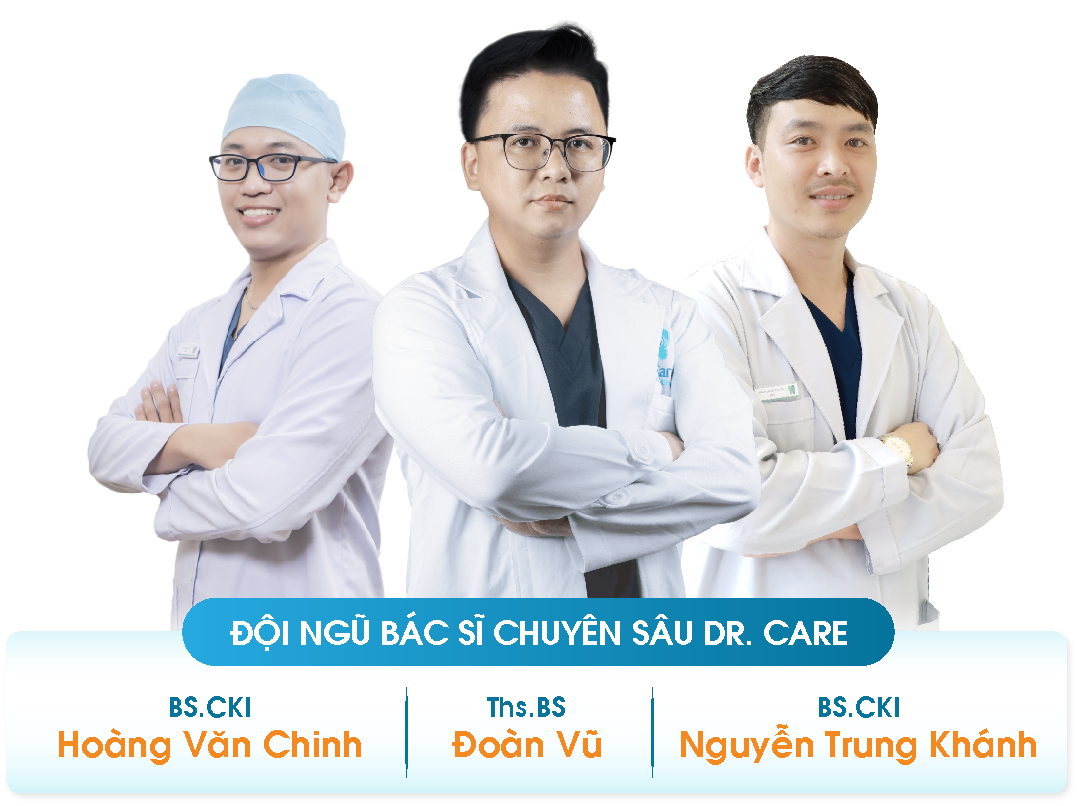
Đến nha khoa, Khách hàng được Đội ngũ Bác sĩ dày dặn kinh nghiệm tư vấn tận tâm, cặn kẽ về tình trạng răng miệng. tình trạng mất răng. Bác sĩ sau khi thăm khám kỹ càng sẽ đưa ra giải pháp tối ưu, tiết kiệm và an toàn.
Không chỉ có thế mạnh về chất lượng điều trị, Dr. Care còn không ngừng cập nhật trang thiết bị hiện đại và công nghệ điều trị tối tân hỗ trợ chẩn đoán chuẩn xác, rút ngắn thời gian điều trị, nha khoa với "Liệu pháp trồng răng không đau" cho Khách hàng trải nghiệm trồng răng êm ái, thoải mái như đi spa.
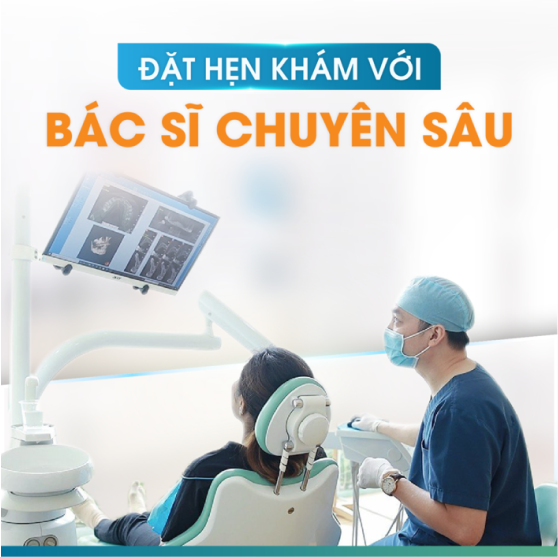
Đặt hẹn với Dr. Care - Implant Clinic để thăm khám, tư vấn và điều trị. Tại đây

(*) Kết quả điều trị có thể khác nhau tùy vào thể trạng mỗi người.
![[HỎI ĐÁP BÁC SĨ]: If I Need an Implant Replacement Part in the U.S., Will an American Dentist Be Able to Source It?](https://drcareimplant.com/upload/image/article/large/2026/08/19/24fa9d8ca64f8dcfd72274ddb2070f8c.png)
![[HỎI ĐÁP BÁC SĨ]: What Is Actually Included in the All-on-4 Price, and Which Items May Be Charged Separately?](https://drcareimplant.com/upload/image/article/large/2026/08/19/e7b13f7c28170274a76f7558e7f9847a.png)
![[HỎI ĐÁP BÁC SĨ]: Can I Get Fixed Temporary Teeth on the Same Day as All-on-4 Surgery Before a Family Wedding?](https://drcareimplant.com/upload/image/article/large/2026/08/19/a2fe83563342773a70ed9cbfb4494d1e.png)
![[HỎI ĐÁP BÁC SĨ]: After I Return to Canada, Can My Implant Follow-Up Be Done Remotely or Do I Need to Fly Back to Vietnam?](https://drcareimplant.com/upload/image/article/large/2026/08/19/b1bc3a2f77c914fa7b8be2f0d2eb9749.png)
![[HỎI ĐÁP BÁC SĨ]: Should Full-Arch Implants on Both Jaws Be Done at the Same Time or Staged?](https://drcareimplant.com/upload/image/article/large/2026/08/19/8e271035eb2926d756bfb209a2c4c739.png)
![[HỎI ĐÁP BÁC SĨ]: What Pain Medication Will I Actually Receive After Implant Surgery in Vietnam?](https://drcareimplant.com/upload/image/article/large/2026/08/19/b07634d0cc95817402a5048130f1f86a.png)